OPERA VR
Opera and Ballet in Virtual Reality for Children
Project description
Project period: 2025–2026
Partners: Polish University Abroad (PUNO) and Conservatorio G. Puccini in La Spezia
PUNO Project Coordinator: Dr Dorota Hrycak-Krzyżanowska
Opera VR (Children’s Opera VR / Educational Modules Children’s Opera) is an international educational and artistic project delivered under the PNRR AFAM MTNT – Music Theatre & New Technologiesprogramme. Its aim was to create an immersive learning environment that introduces children and young people to the worlds of opera and ballet through virtual reality.
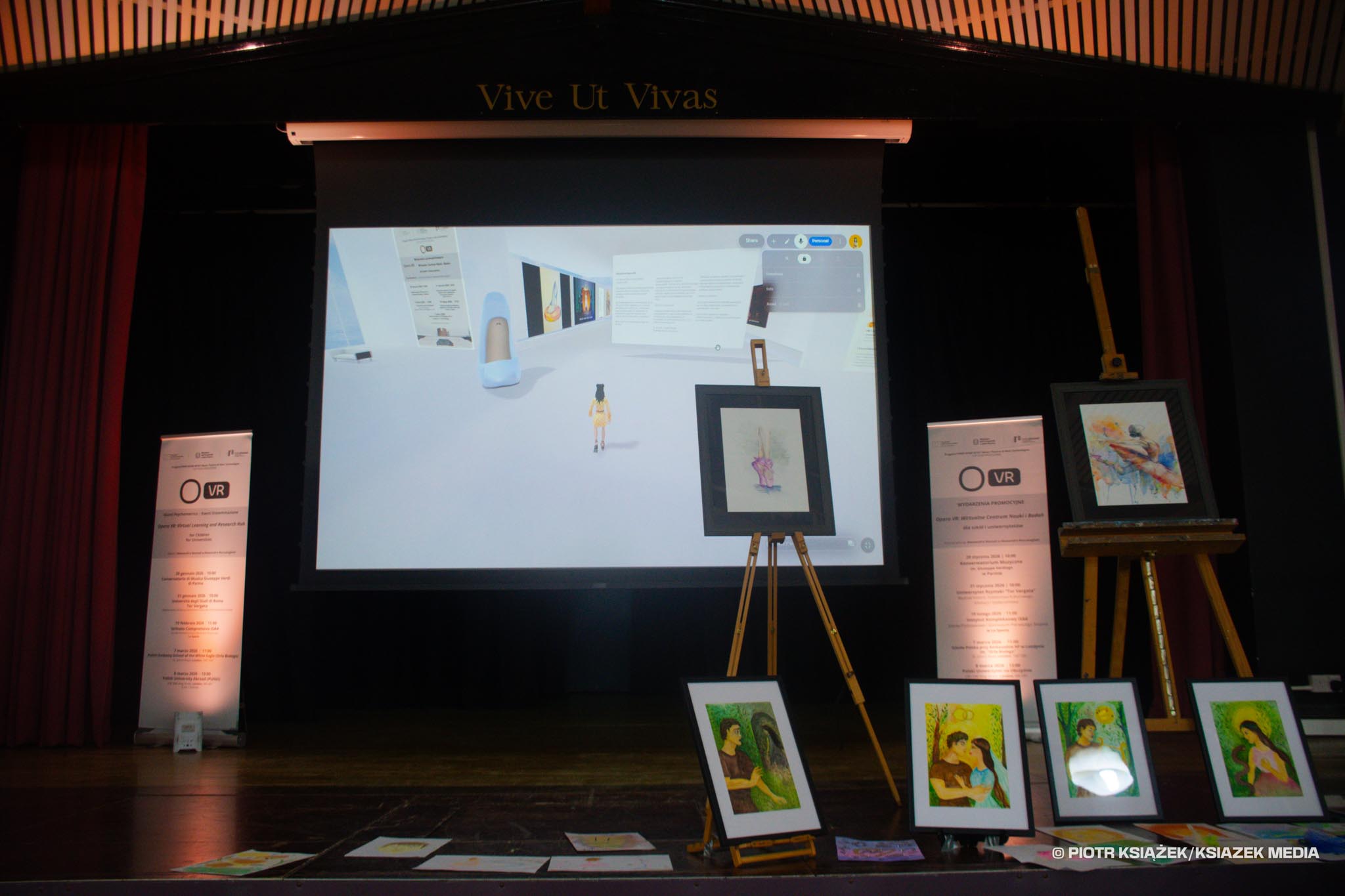
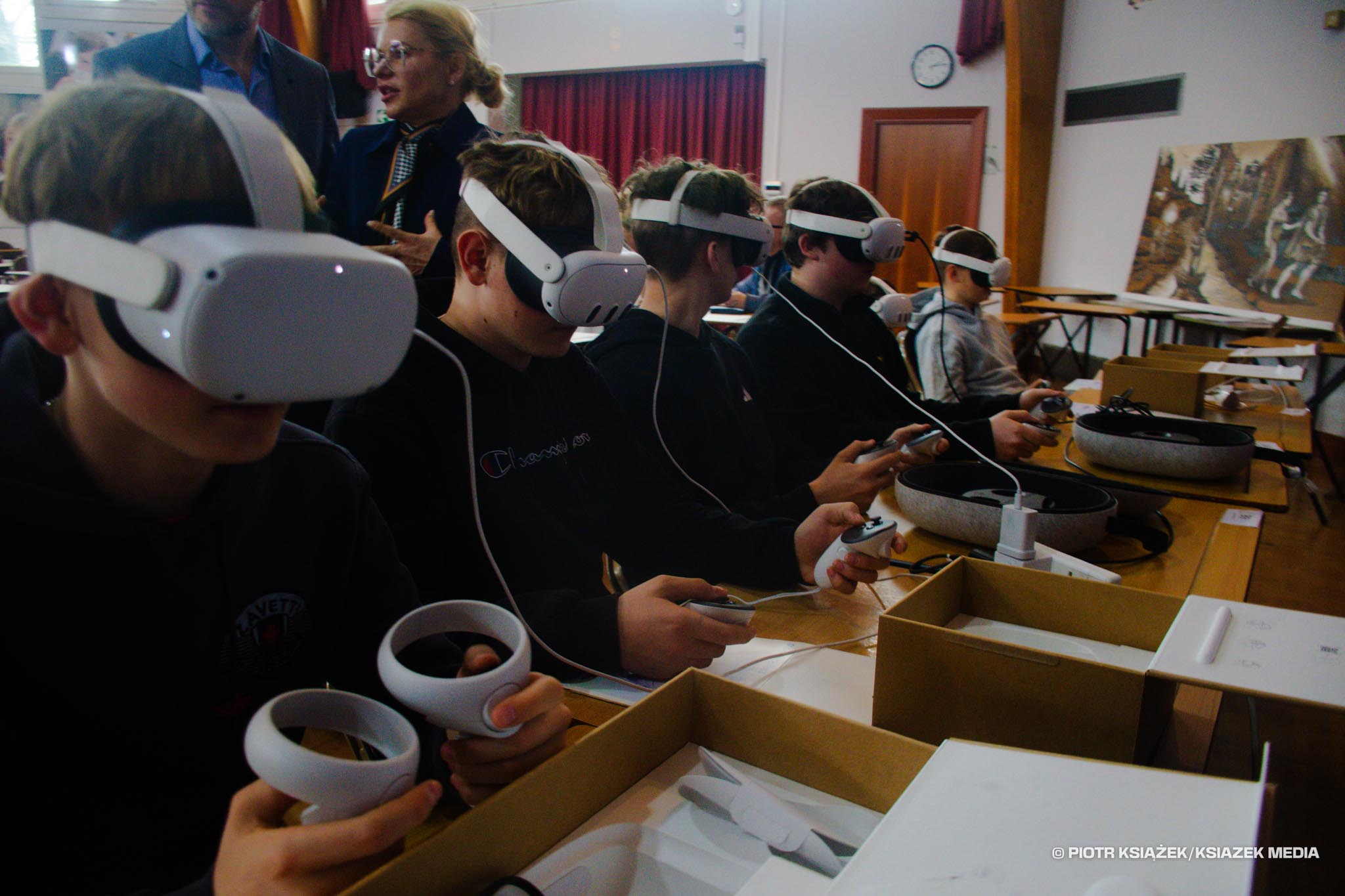
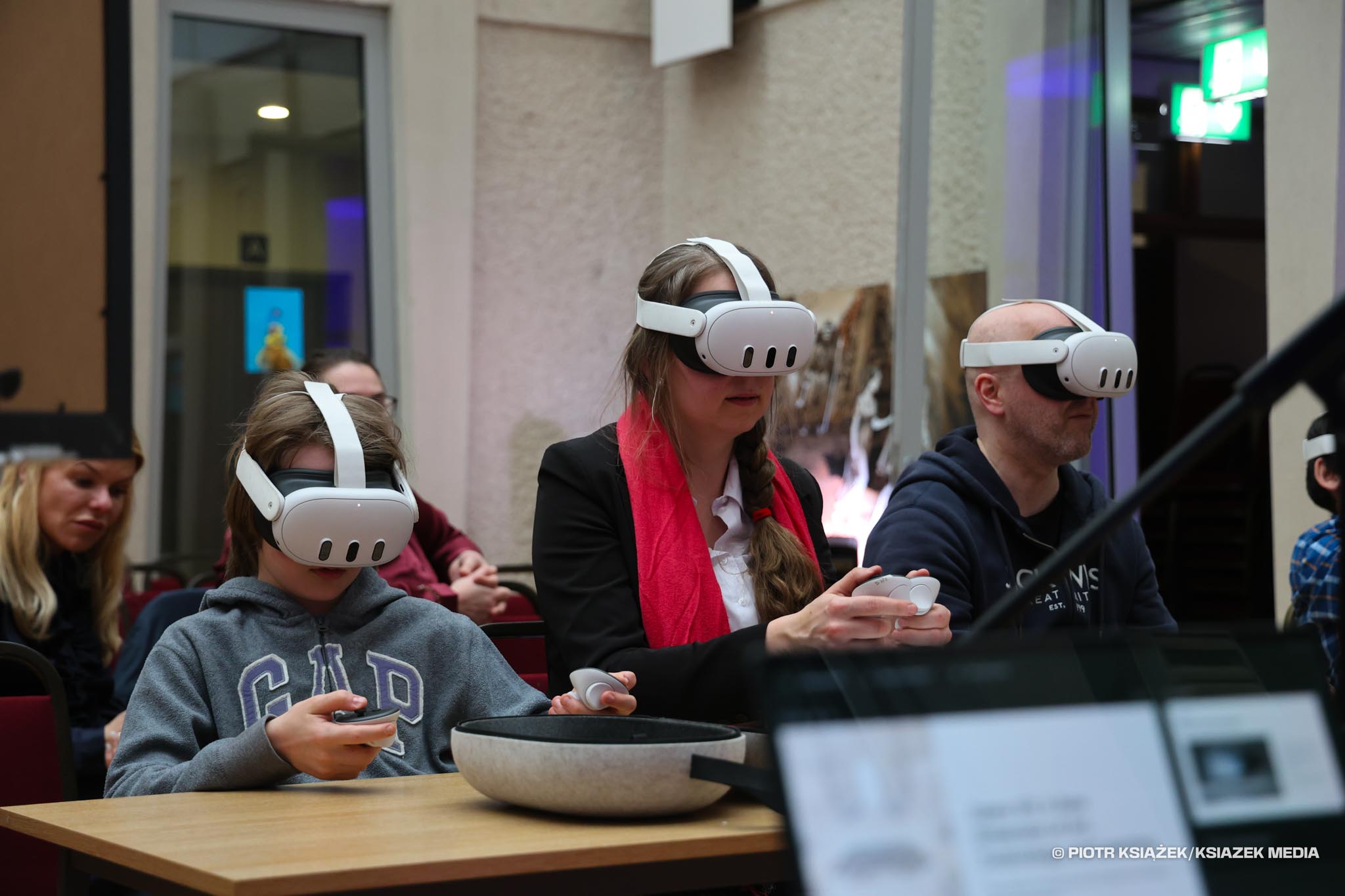
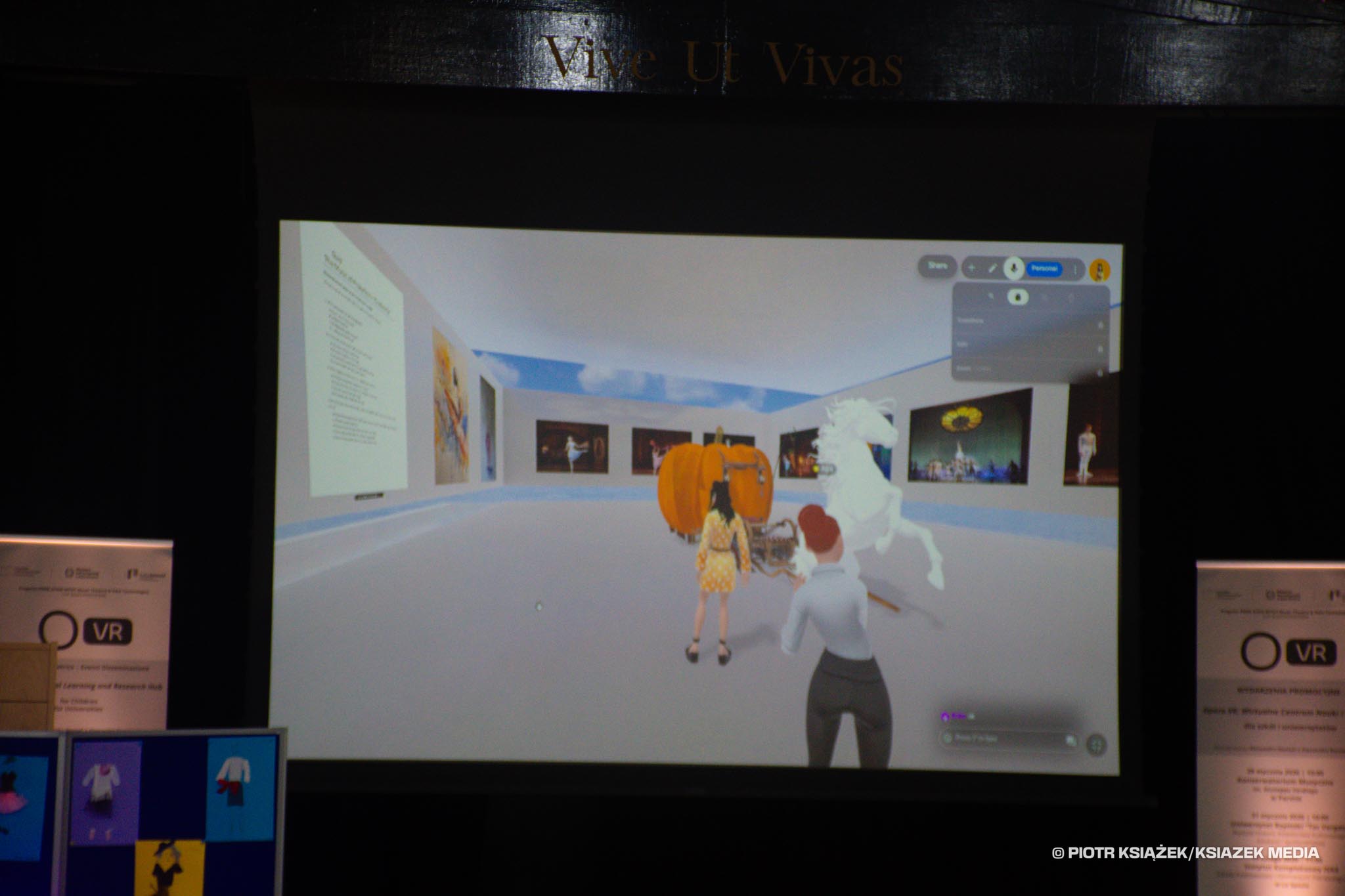
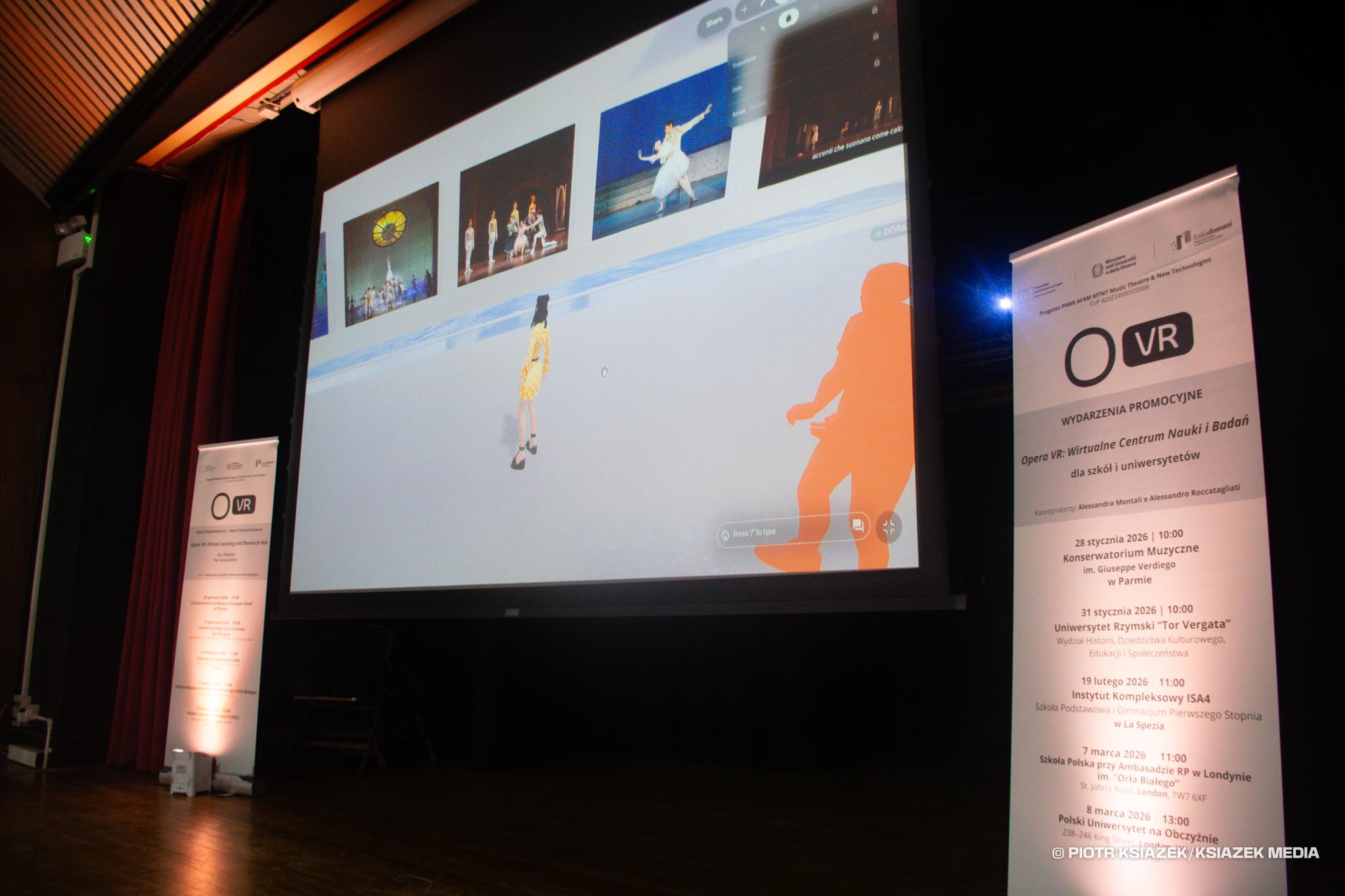
The project developed two educational modules on the Spatial.io platform, accessible through VR headsets: Claudio Monteverdi’s opera L’Orfeo and Sergei Prokofiev’s ballet Cinderella. Learners move through purposefully designed spaces, including the Research Room, the Performance Room and the NPCs’ Room, where they complete activities, watch audiovisual materials, listen to music, explore its different layers and take part in interactive quizzes.
The project produced:
- 20 virtual-guide narrations;
- 28 video resources;
- 36 educational PDF materials;
- 20 interactive text and audio quizzes;
- 16 drag-and-drop activities;
- multitrack audio examples enabling learners to explore individual layers of the music.
All resources were created in English and Italian for pupils aged 9–14. The project also included a teacher guidance document outlining learning objectives, methodological principles and creative follow-up activities, together with video materials supporting the use of VR headsets in educational settings.
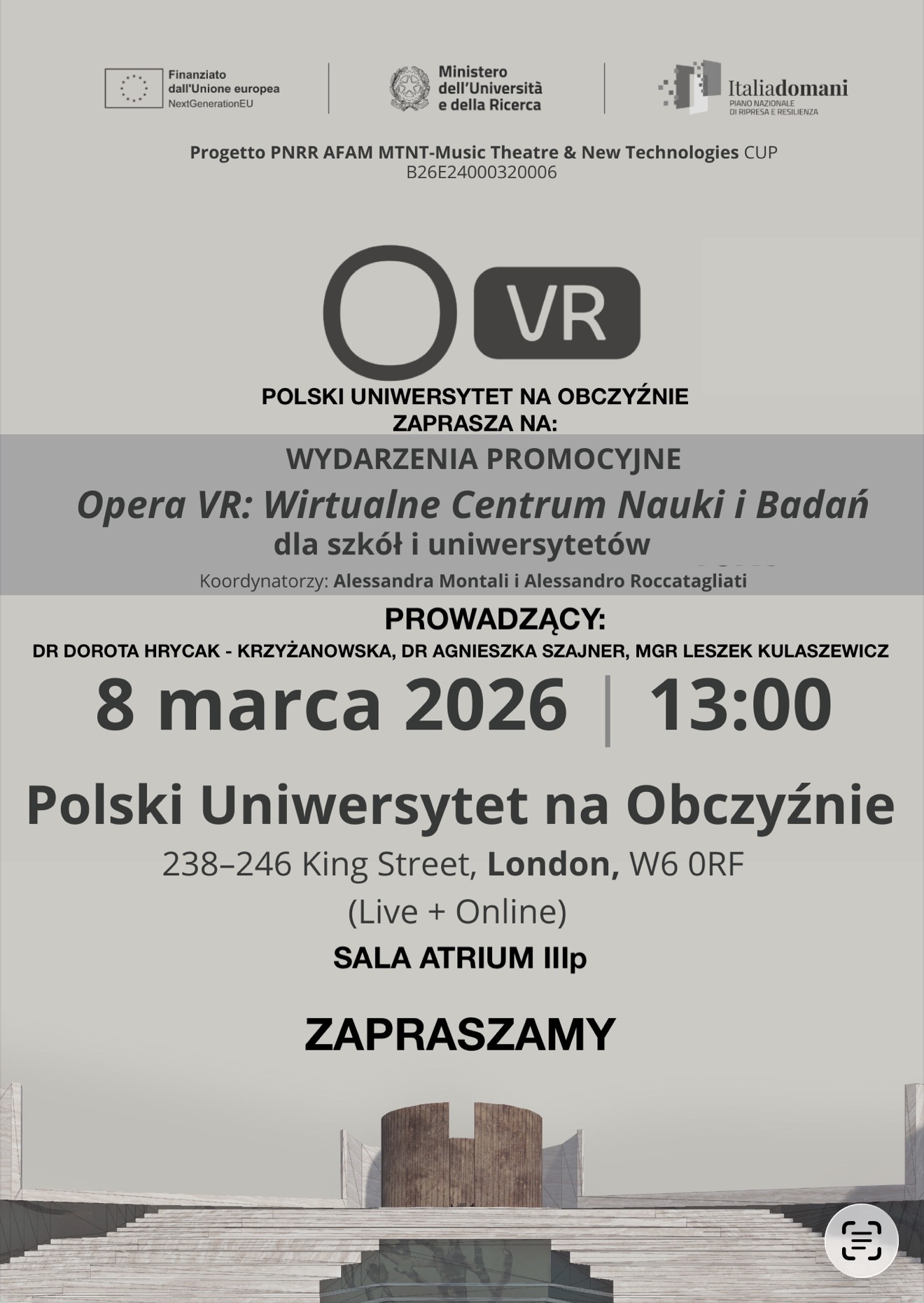
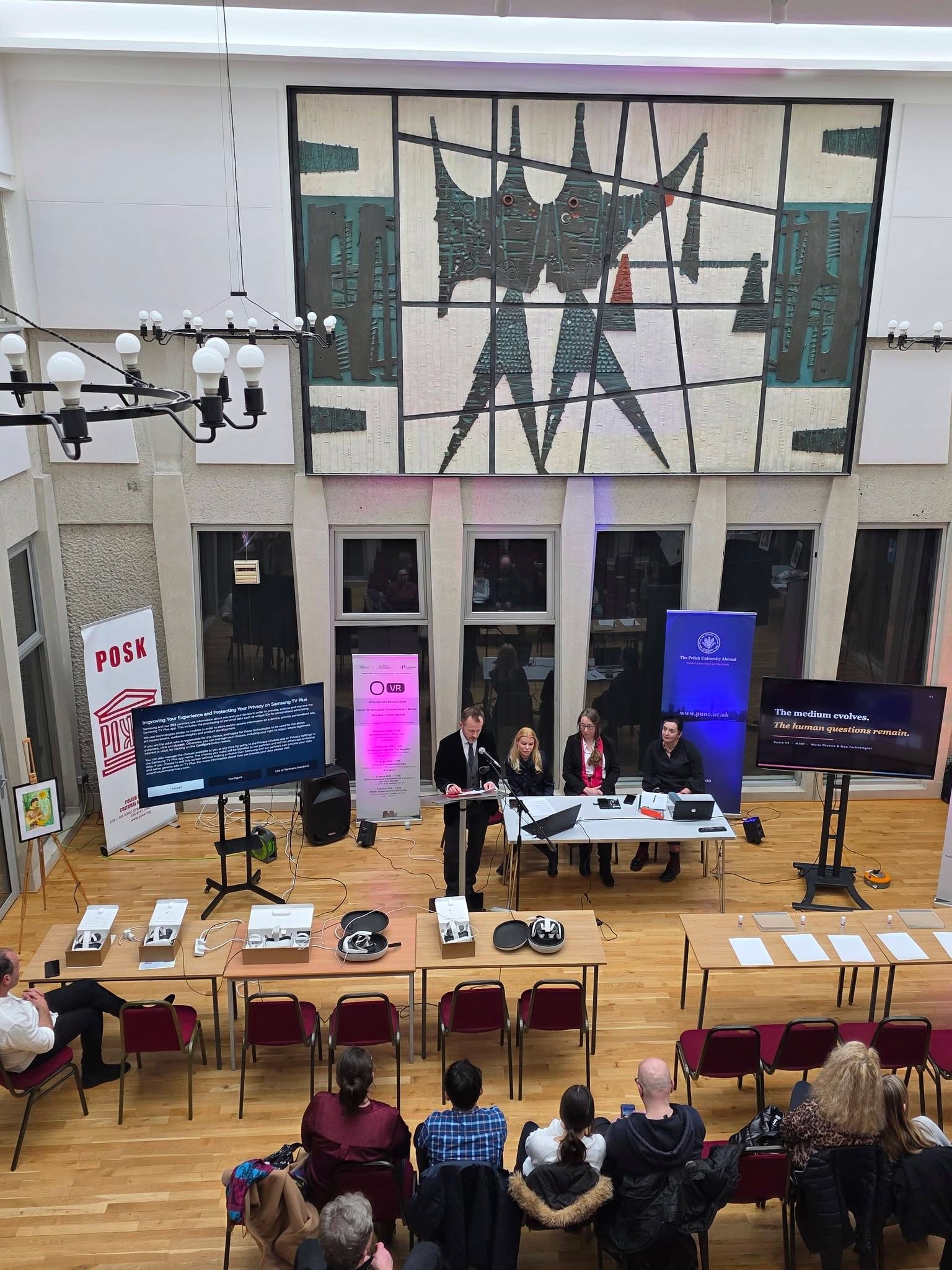
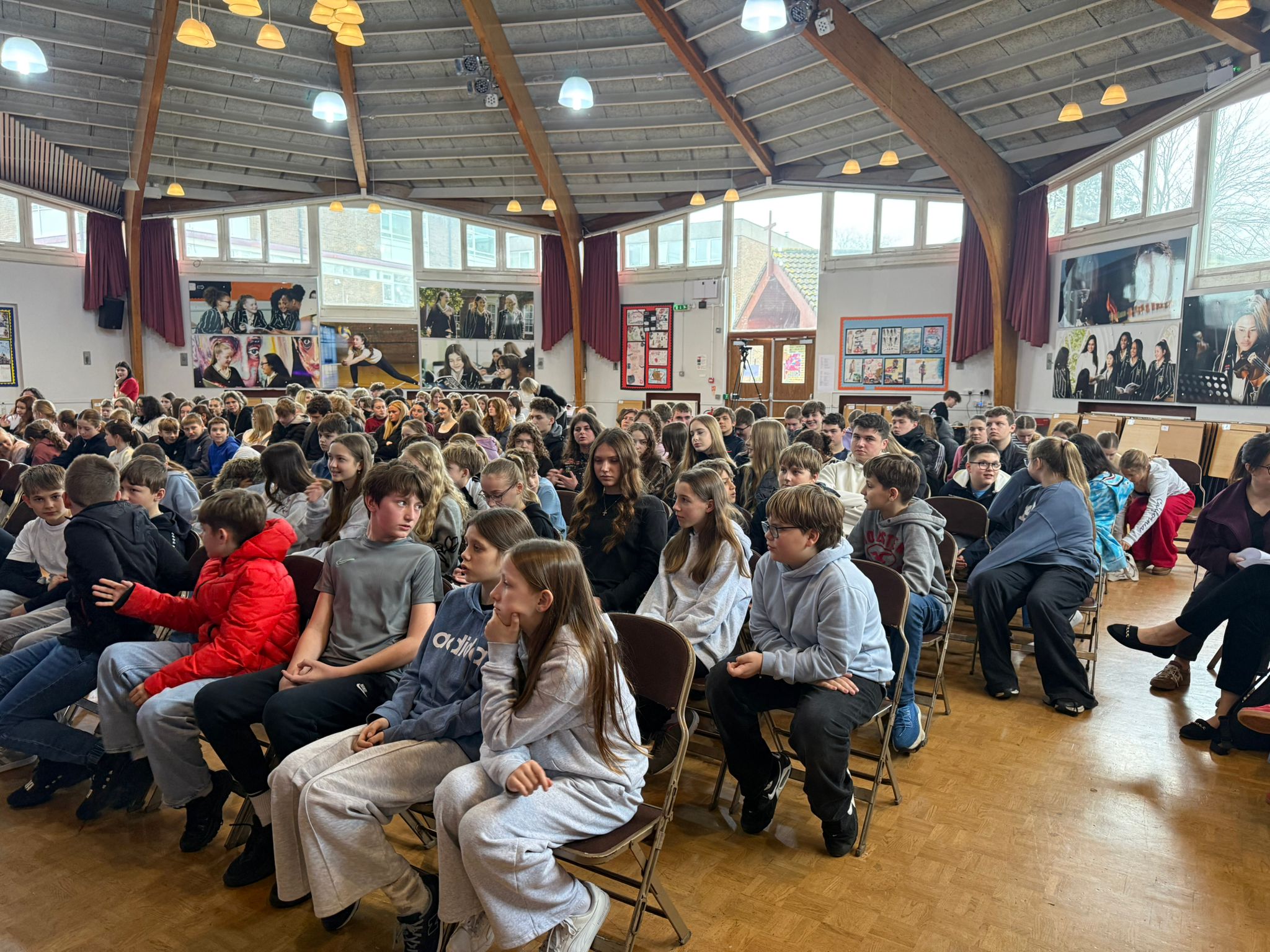
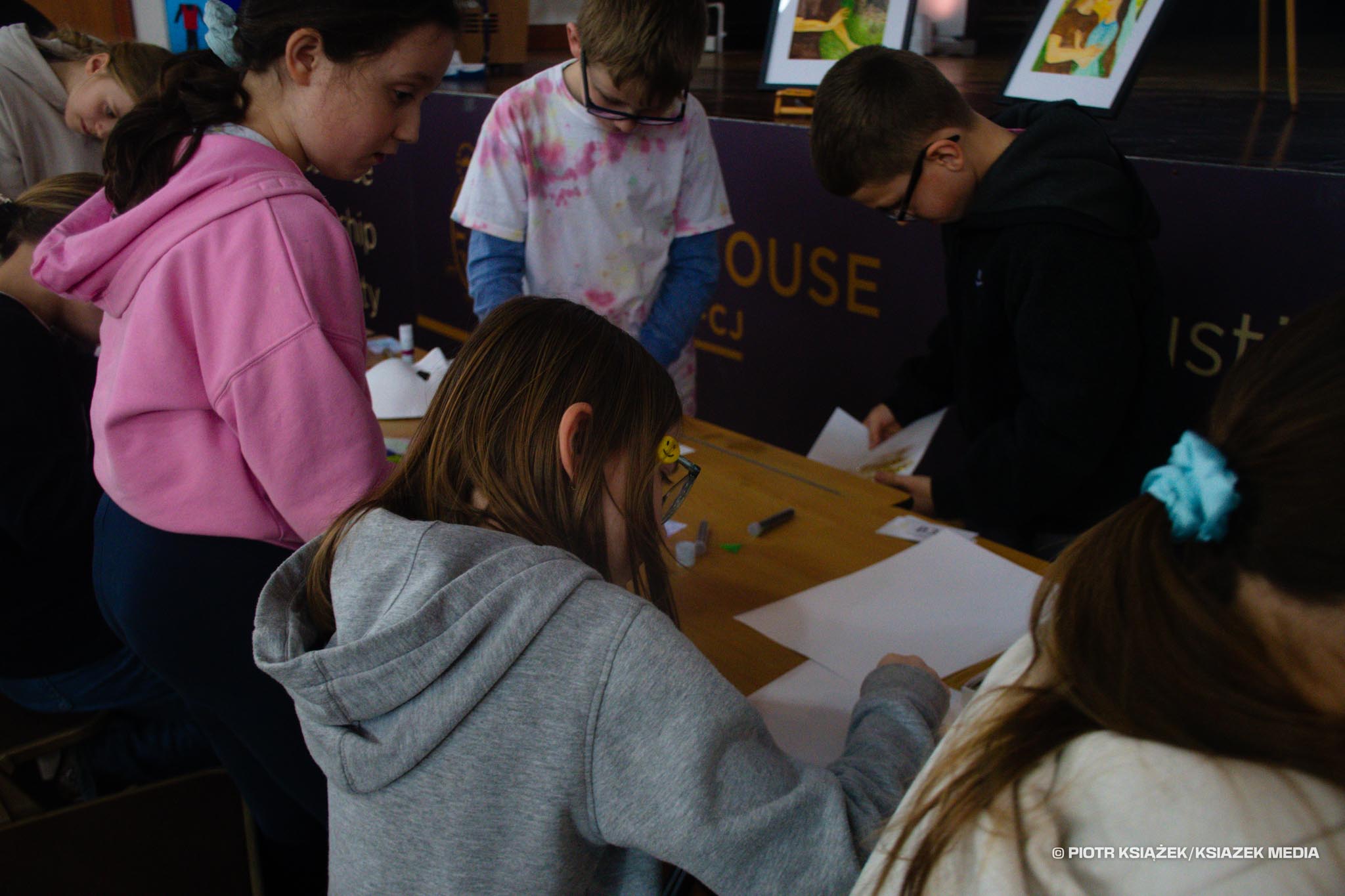
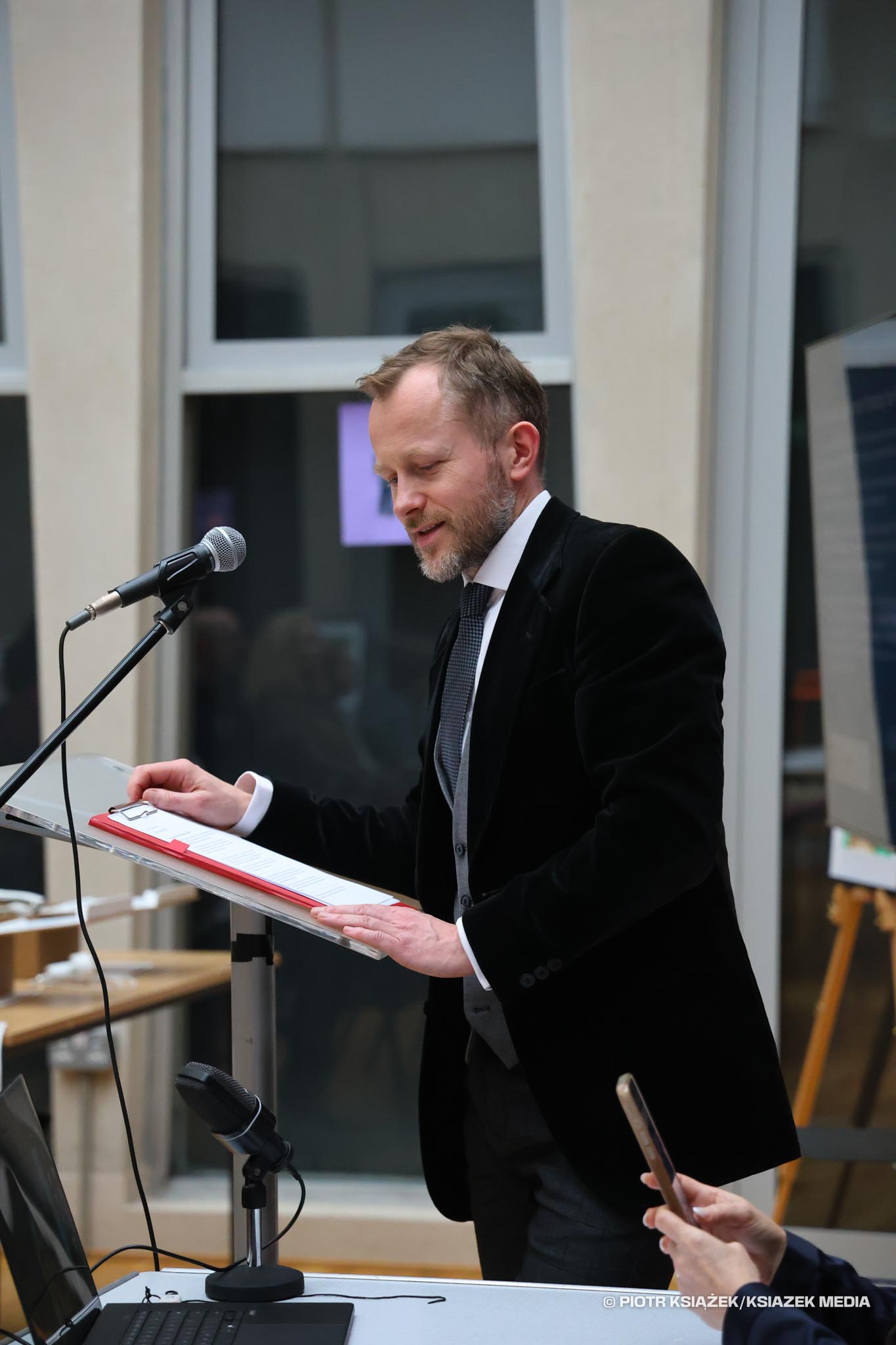
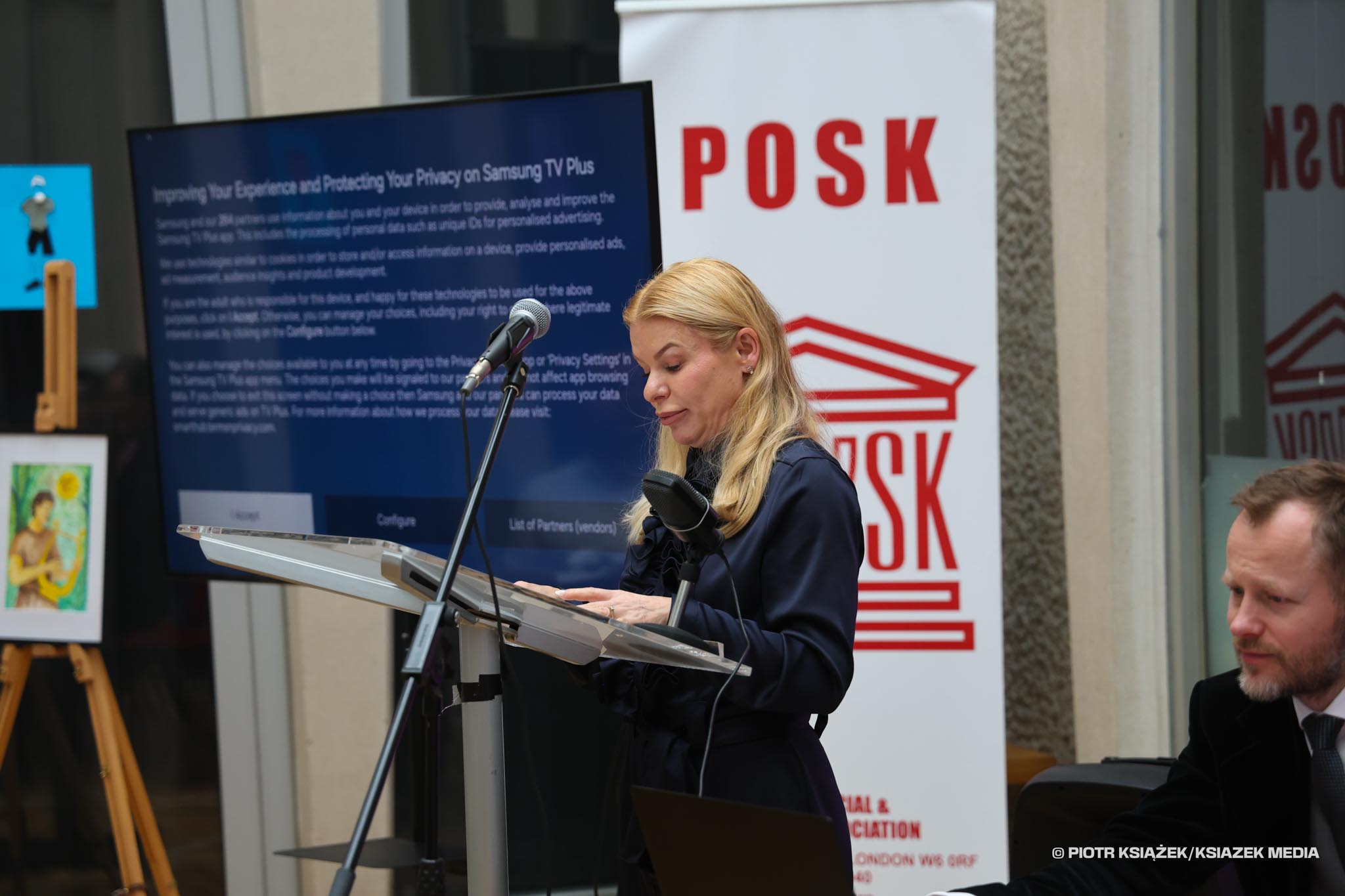
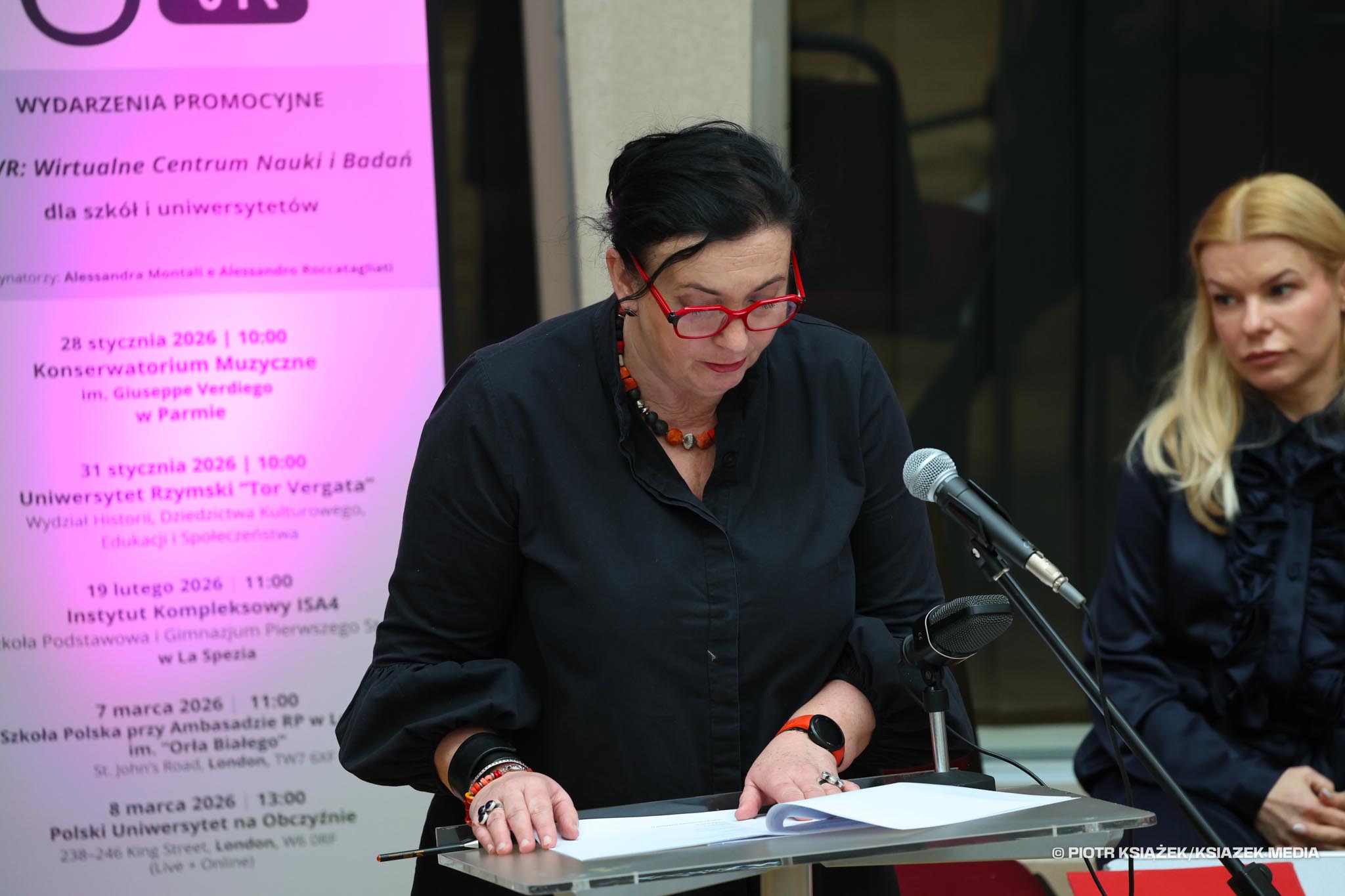
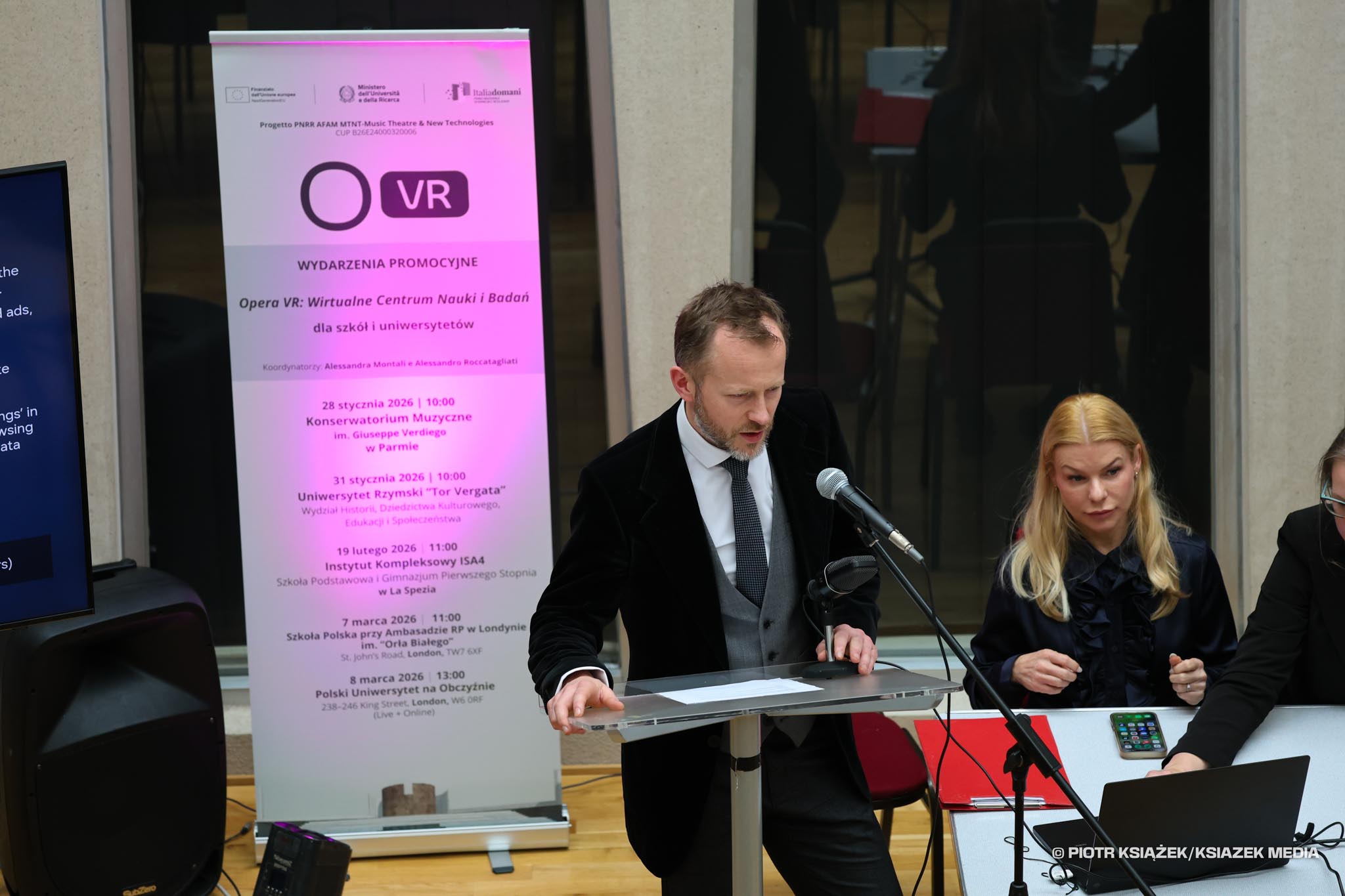
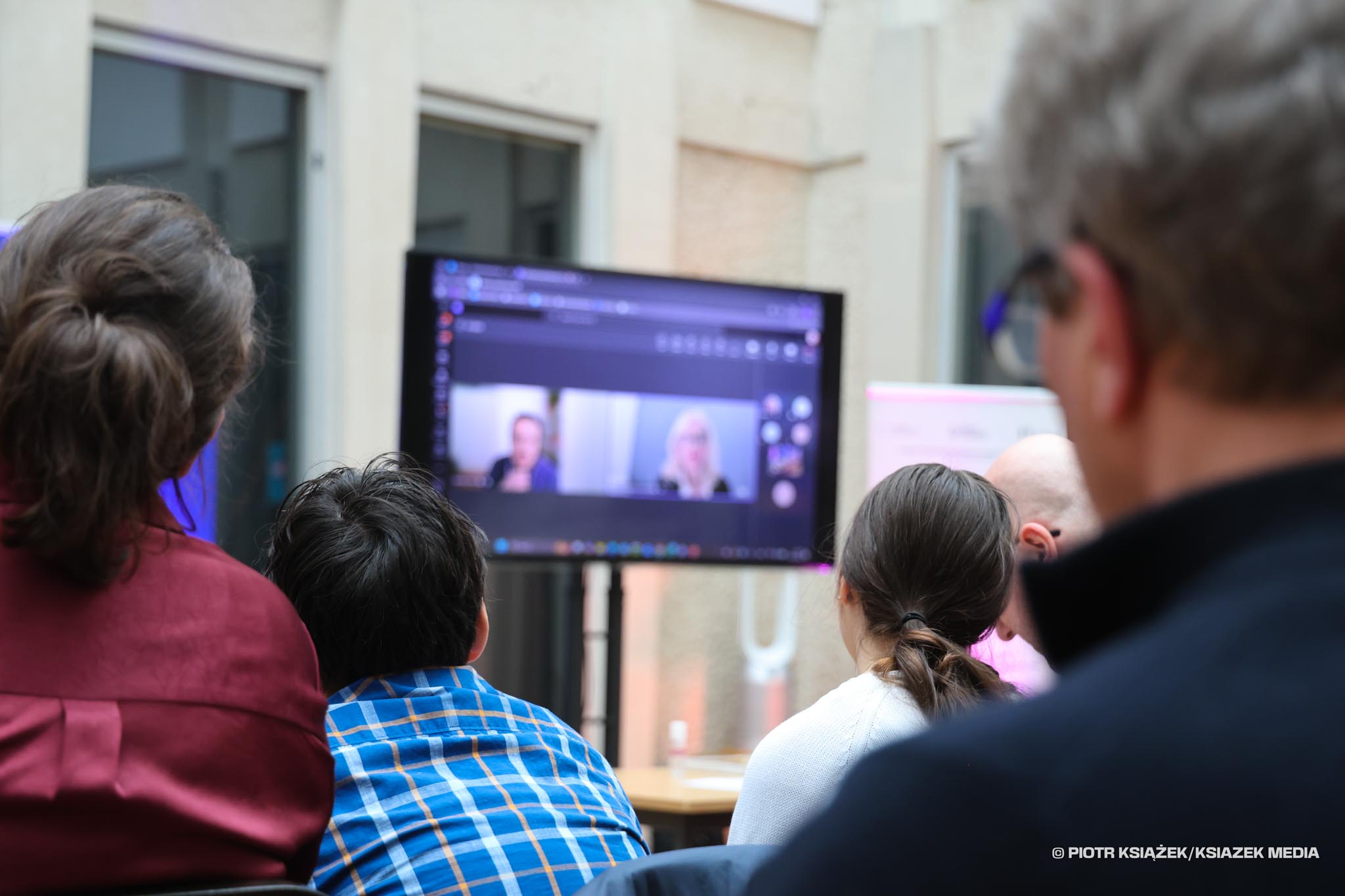
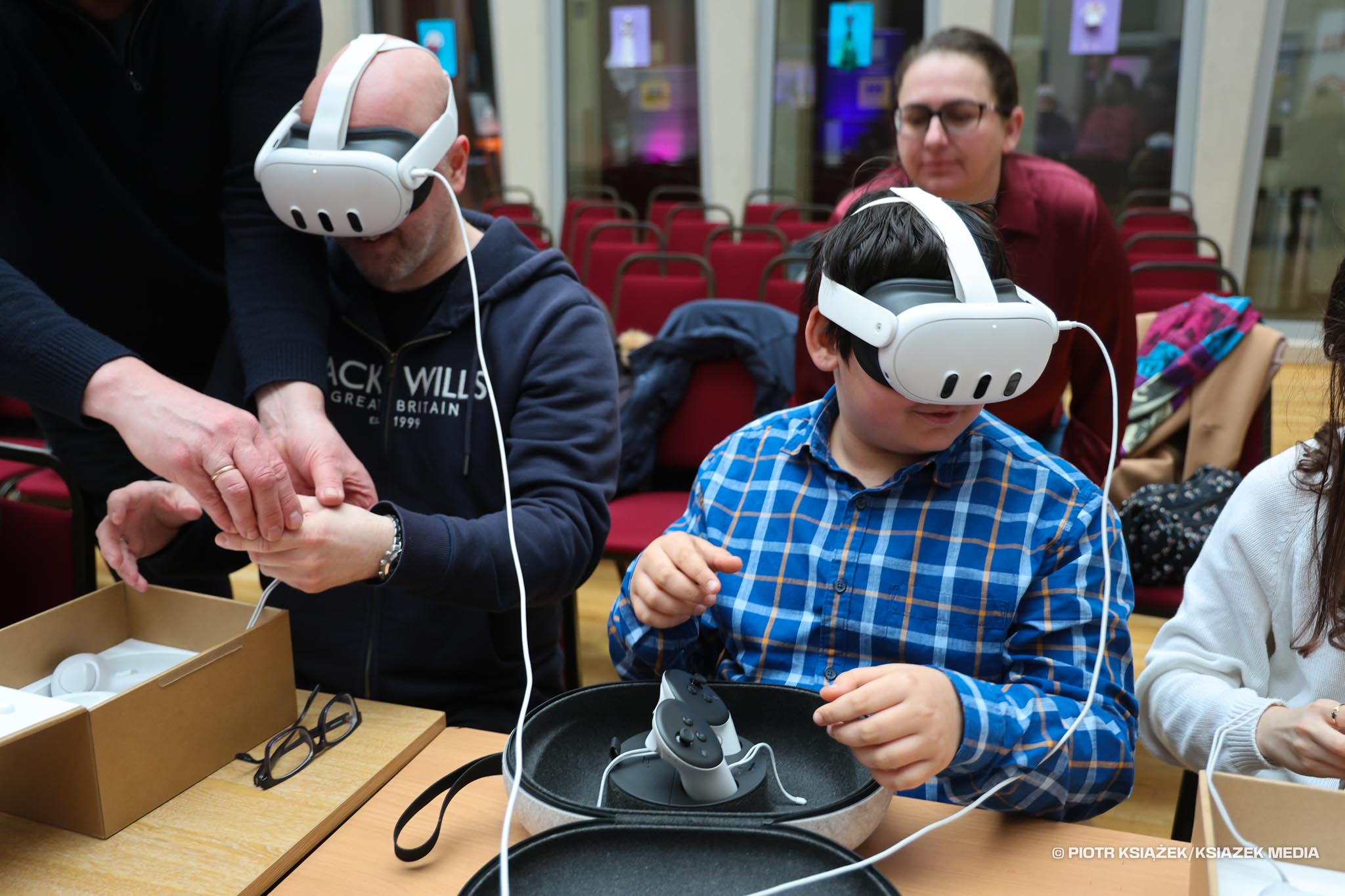
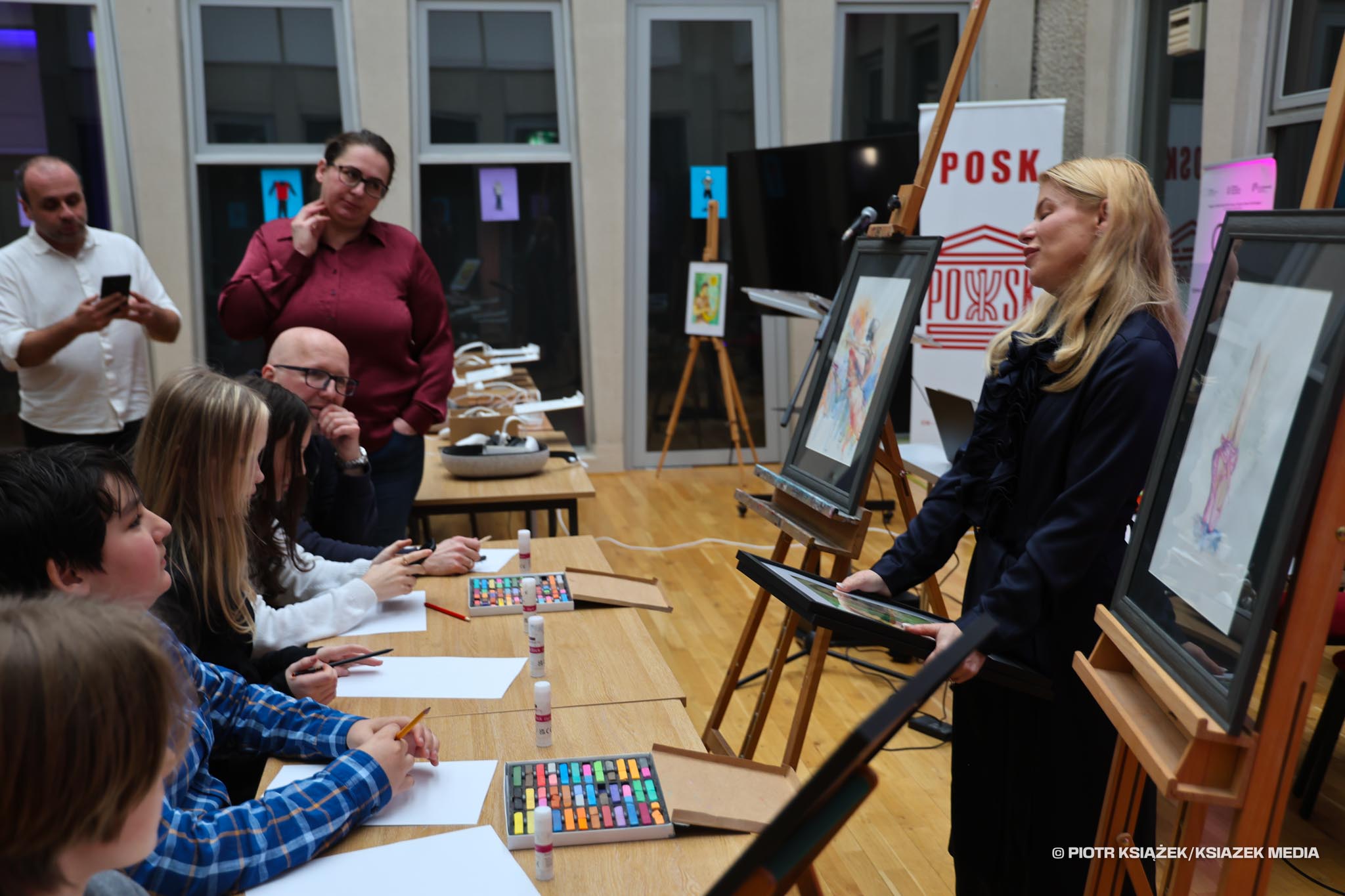
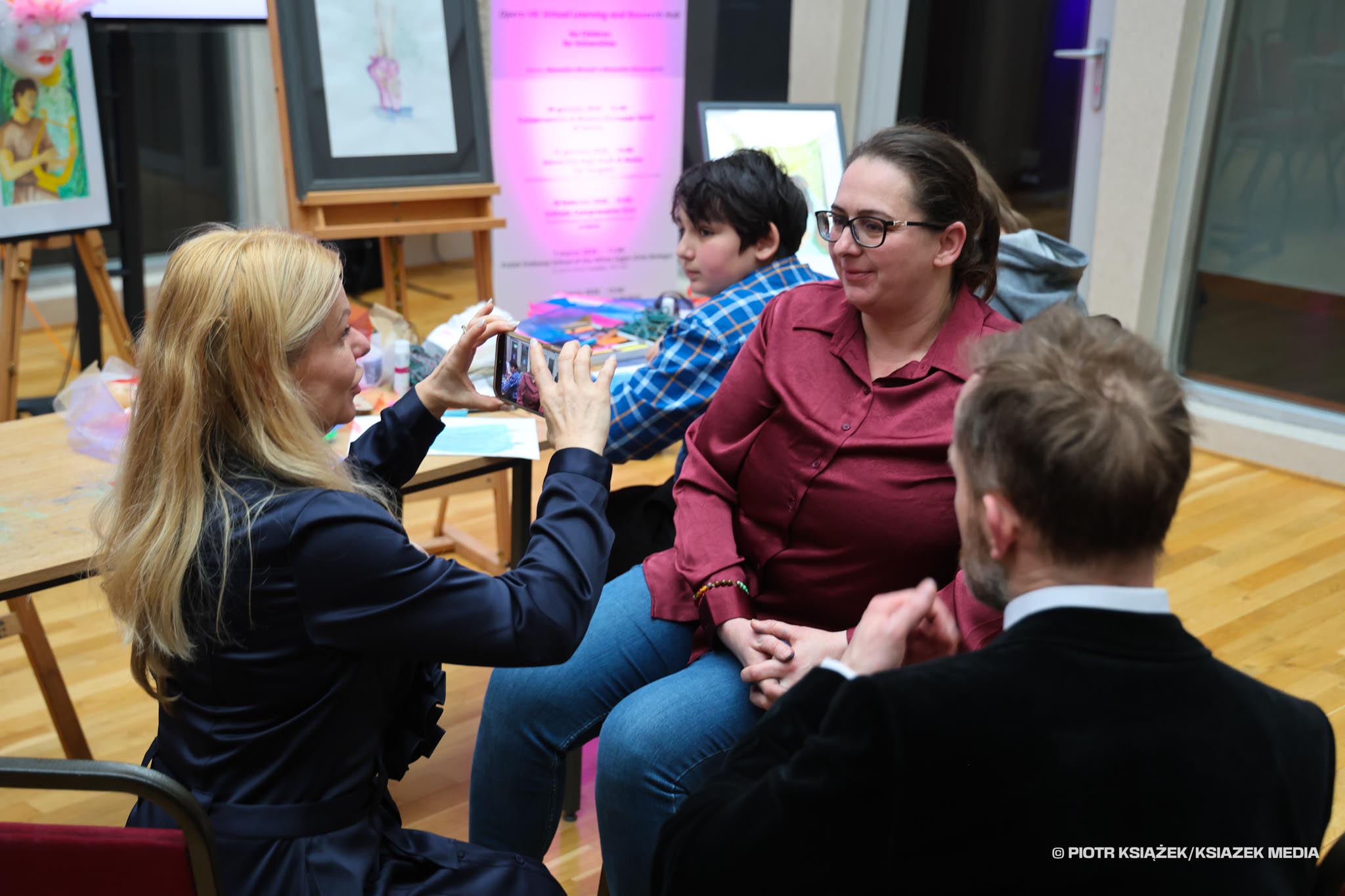
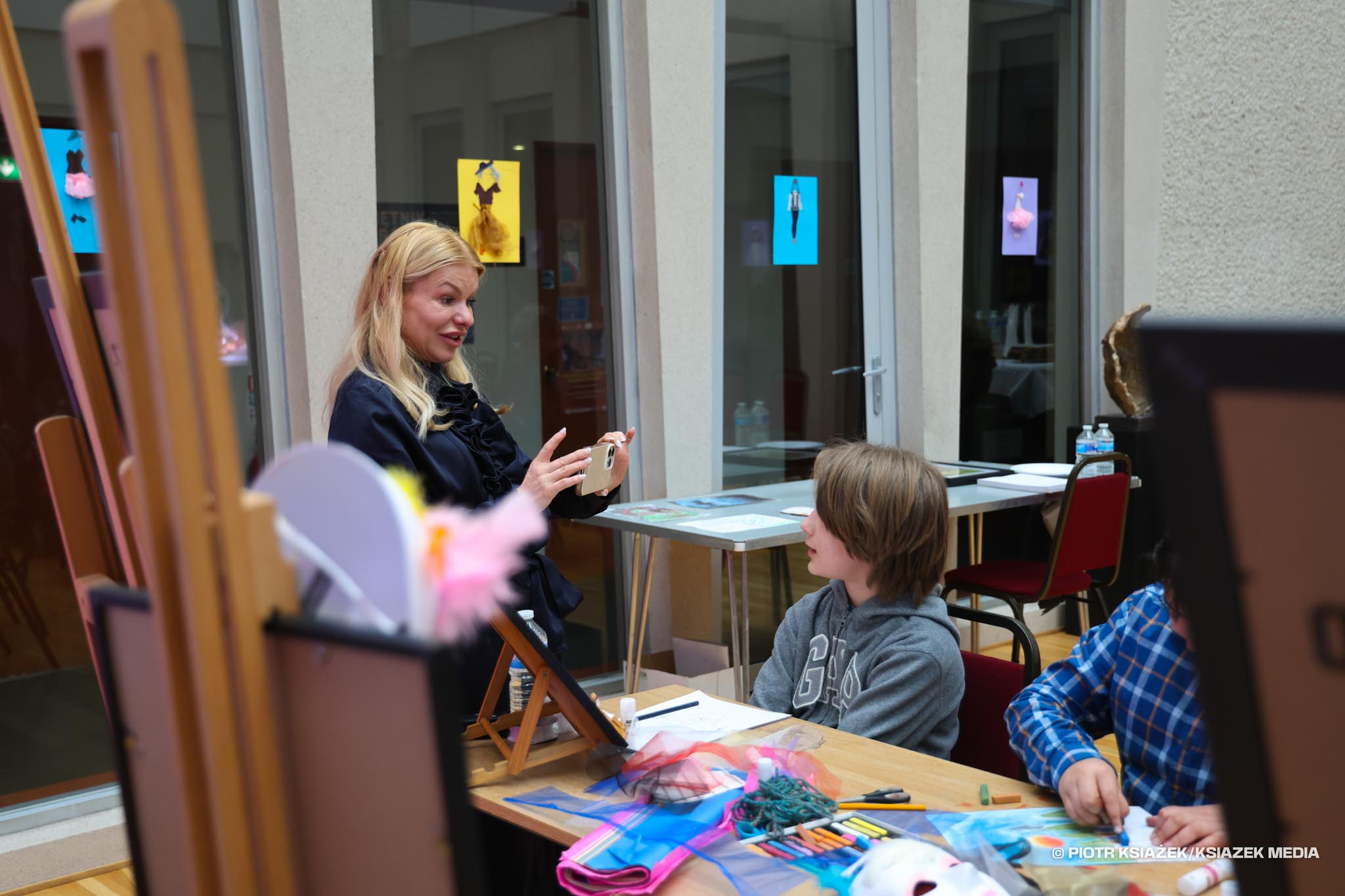
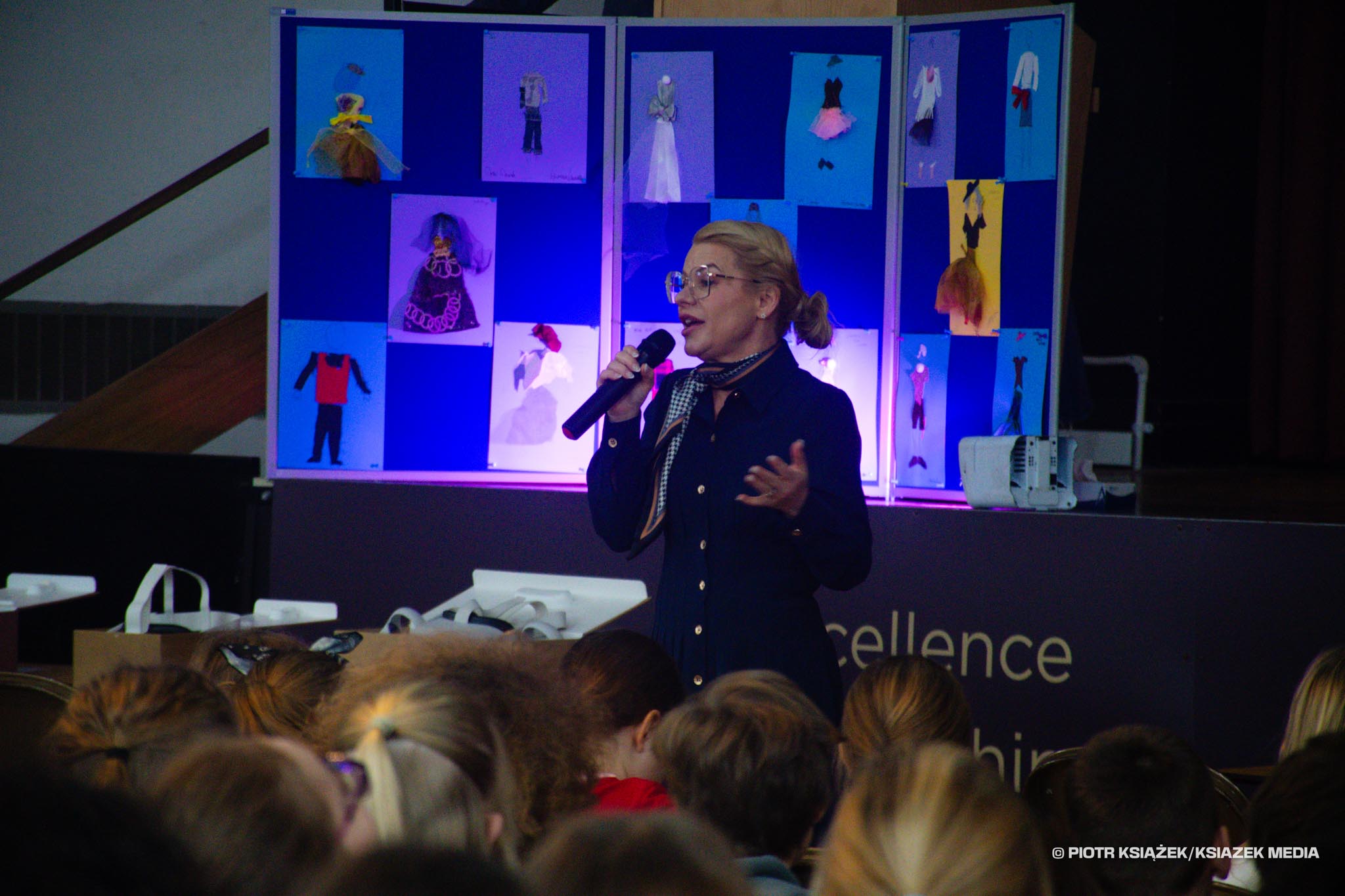
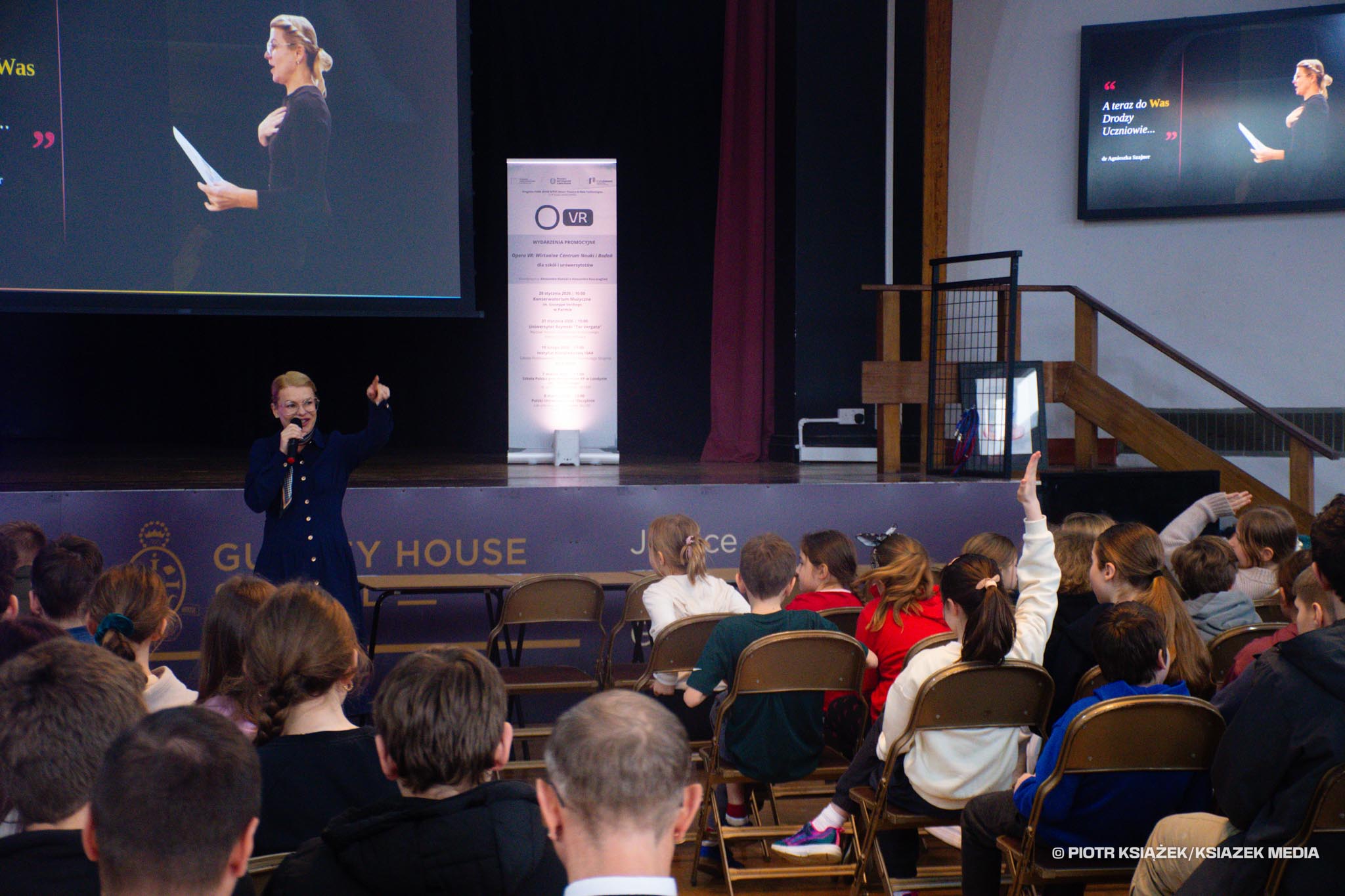
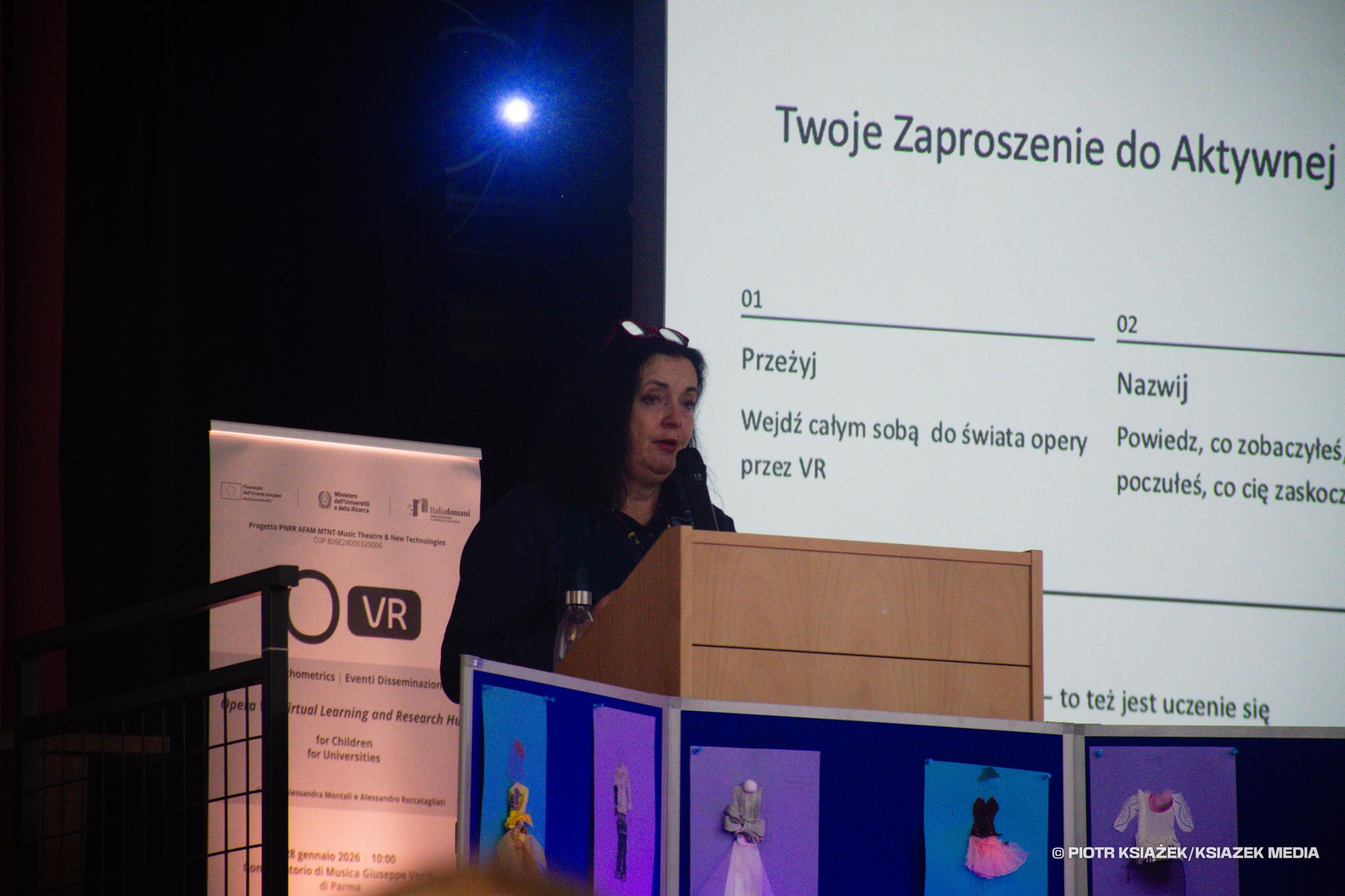
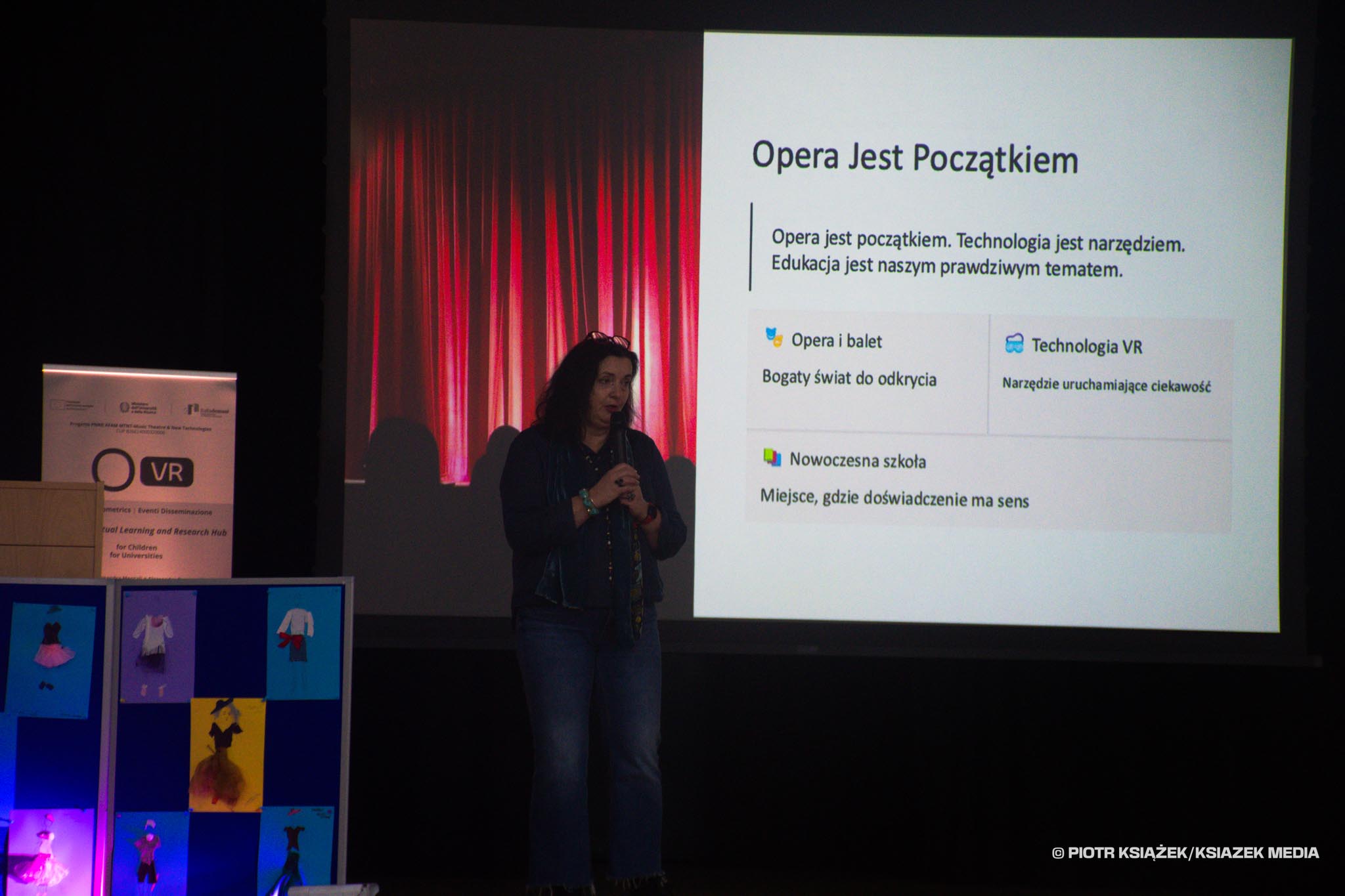
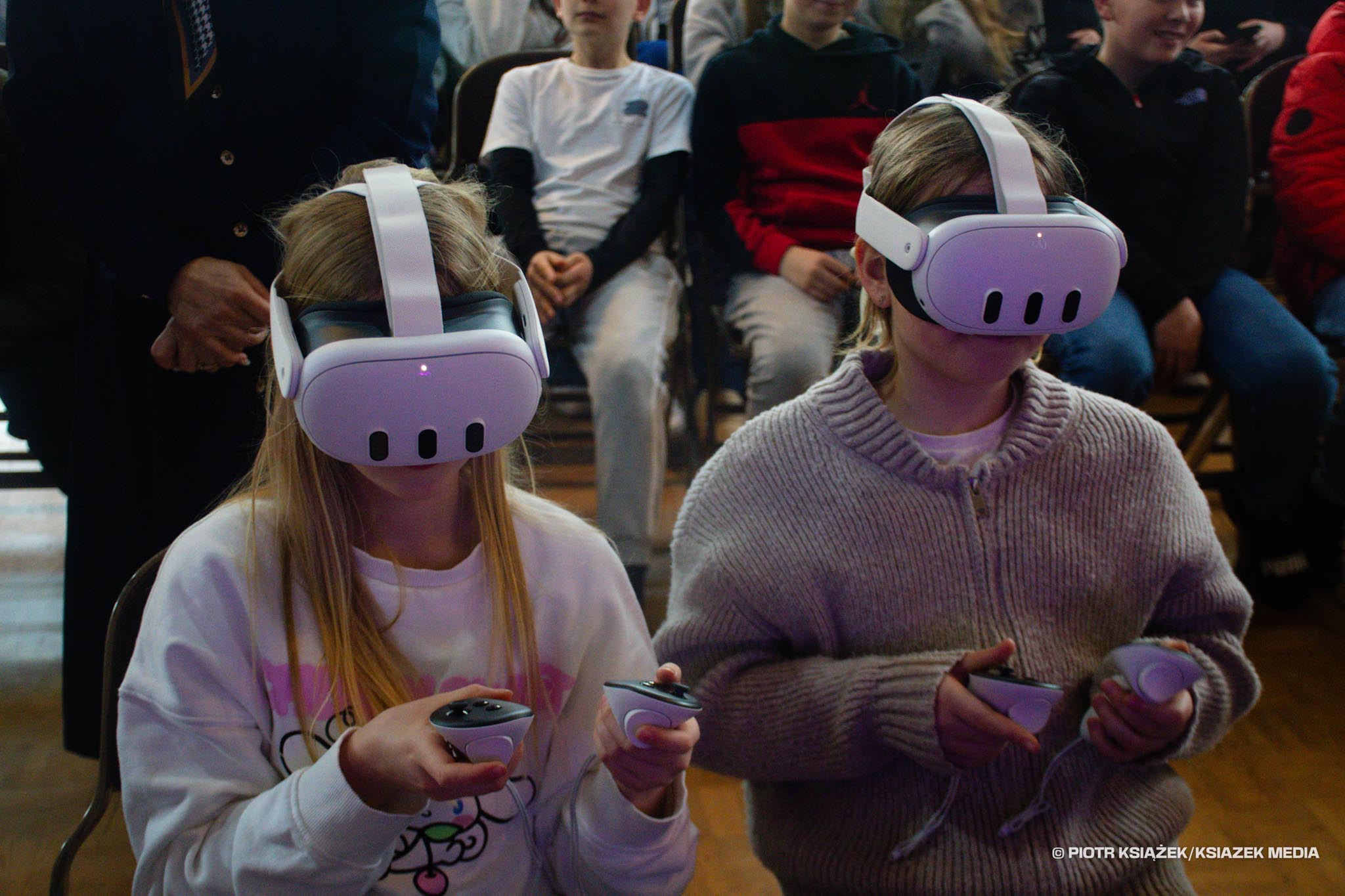
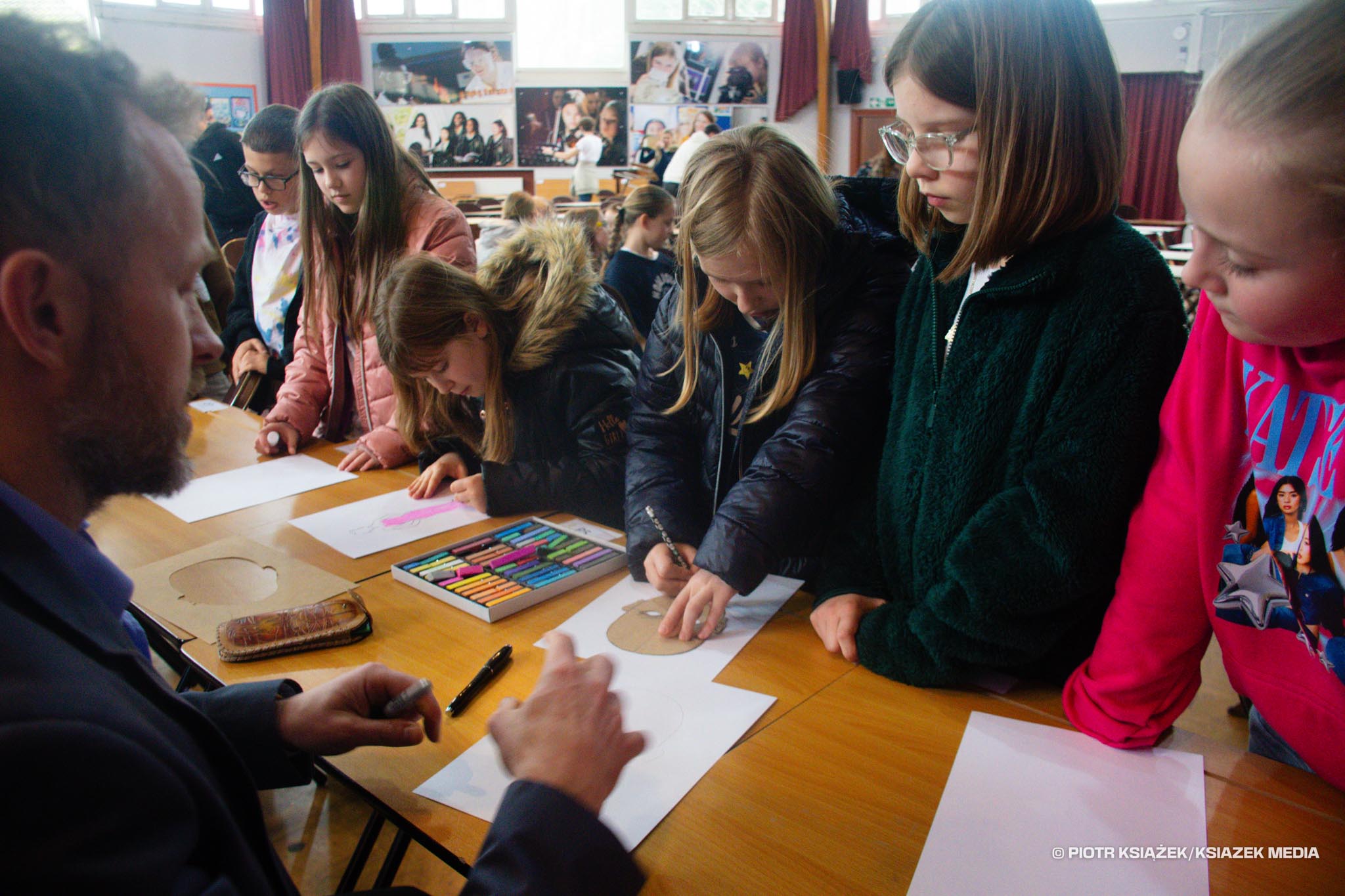
The project outcomes were presented and tested in London in March 2026, at the White Eagle Polish School at the Embassy of the Republic of Poland in London and during a hybrid academic conference at PUNO. Both events included art workshops inspired by the works of Monteverdi and Prokofiev, followed by an exhibition of children’s artwork.
The Team:
dr Dorota Hrycak-Krzyżanowska, dr Agnieszka Szajner, Leszek Kulaszewicz.
Opera VR demonstrates that virtual reality can become a meaningful part of music education when it is grounded in a clear pedagogical framework, creative practice and well-supported teaching.
Project Summary: Opera and Ballet in Virtual Reality for Children
The Opera VR project (Children’s Opera VR / Educational Modules Children’s Opera), delivered by the Polish University Abroad (PUNO) in cooperation with Conservatorio G. Puccini in La Spezia under the PNRR AFAM MTNT – Music Theatre & New Technologies programme, has been completed. Over more than a year, a team of PUNO researchers, educators and artists created an immersive learning environment that opens the world of opera and ballet to children and young people.
Two Masterpieces, Two Virtual Worlds
At the heart of the project are two educational modules built on the Spatial.io platform and accessible through VR headsets: Claudio Monteverdi’s opera L’Orfeo and Sergei Prokofiev’s ballet Cinderella. Each module is a carefully designed learning pathway made up of interconnected spaces, including the Research Room, the Performance Room and the NPC’s Room, home to the virtual guides. Learners move between activity points (hotspots) where they watch, listen, read, compare and answer questions at their own pace, yet within a safe and clearly planned structure.
Art at the Source of Technology
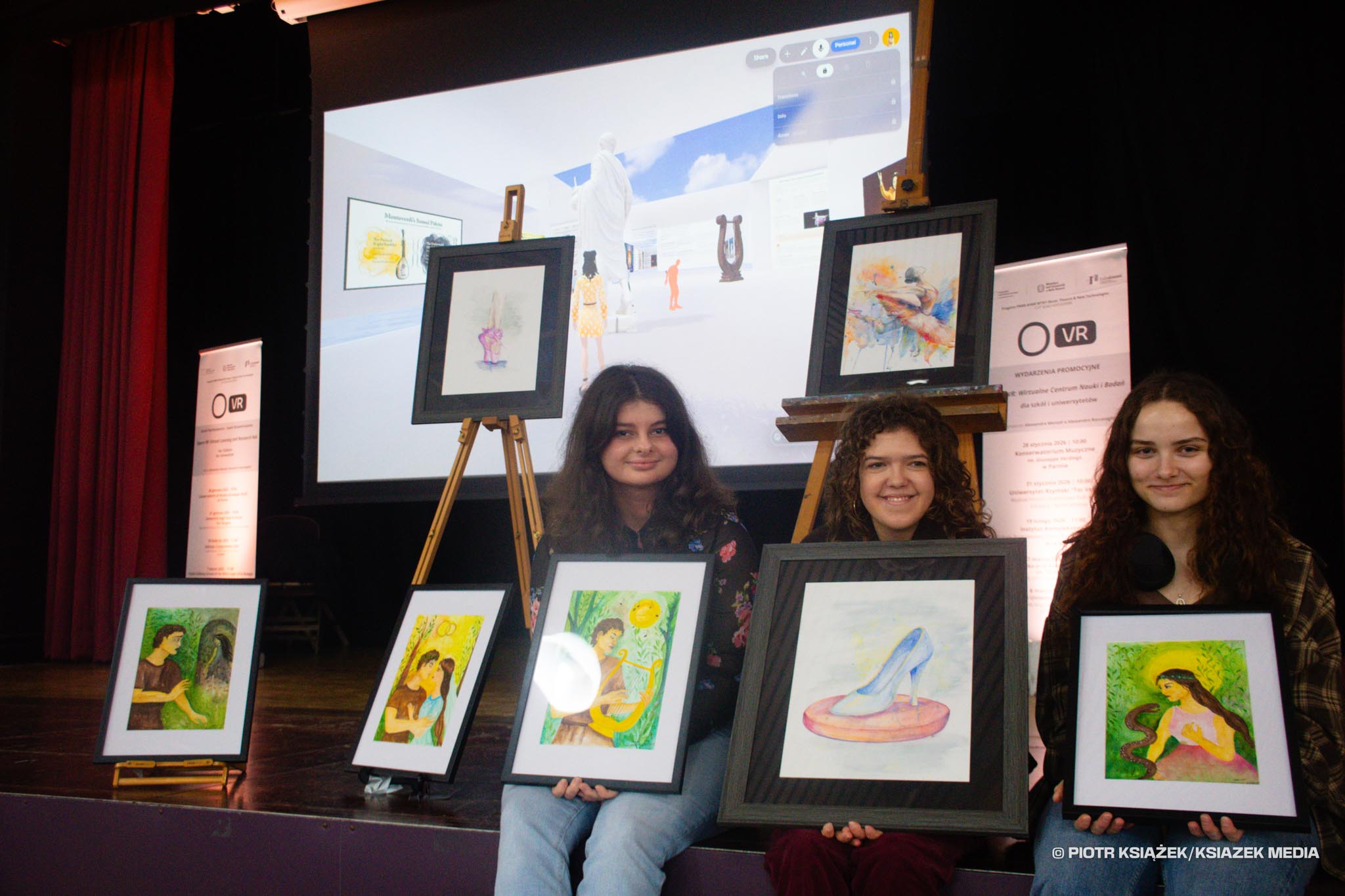
The digital world of Opera VR is rooted in traditional artistic creation. Three artists, Andrzej Zelewski, Dorota Hrycak-Krzyżanowska, and Sabina Hengier, created original artworks specifically for the project. These works became the inspiration for the colour palette, animated characters, and the atmosphere of the virtual environments. The original artworks were presented to the public during events held in London in March.
Support for Teachers
From the outset, the project was designed not only for learners but also for educators. A Children’s Guidance Document was prepared for teachers, setting out educational objectives, methodological principles and ideas for creative follow-up activities, together with video materials that help teachers lead VR-based lessons with confidence. The aim is for immersive technology to become a meaningful complement to music lessons rather than a one-off novelty.
Tested with Children
The project outcomes were tested and presented at two events in London:
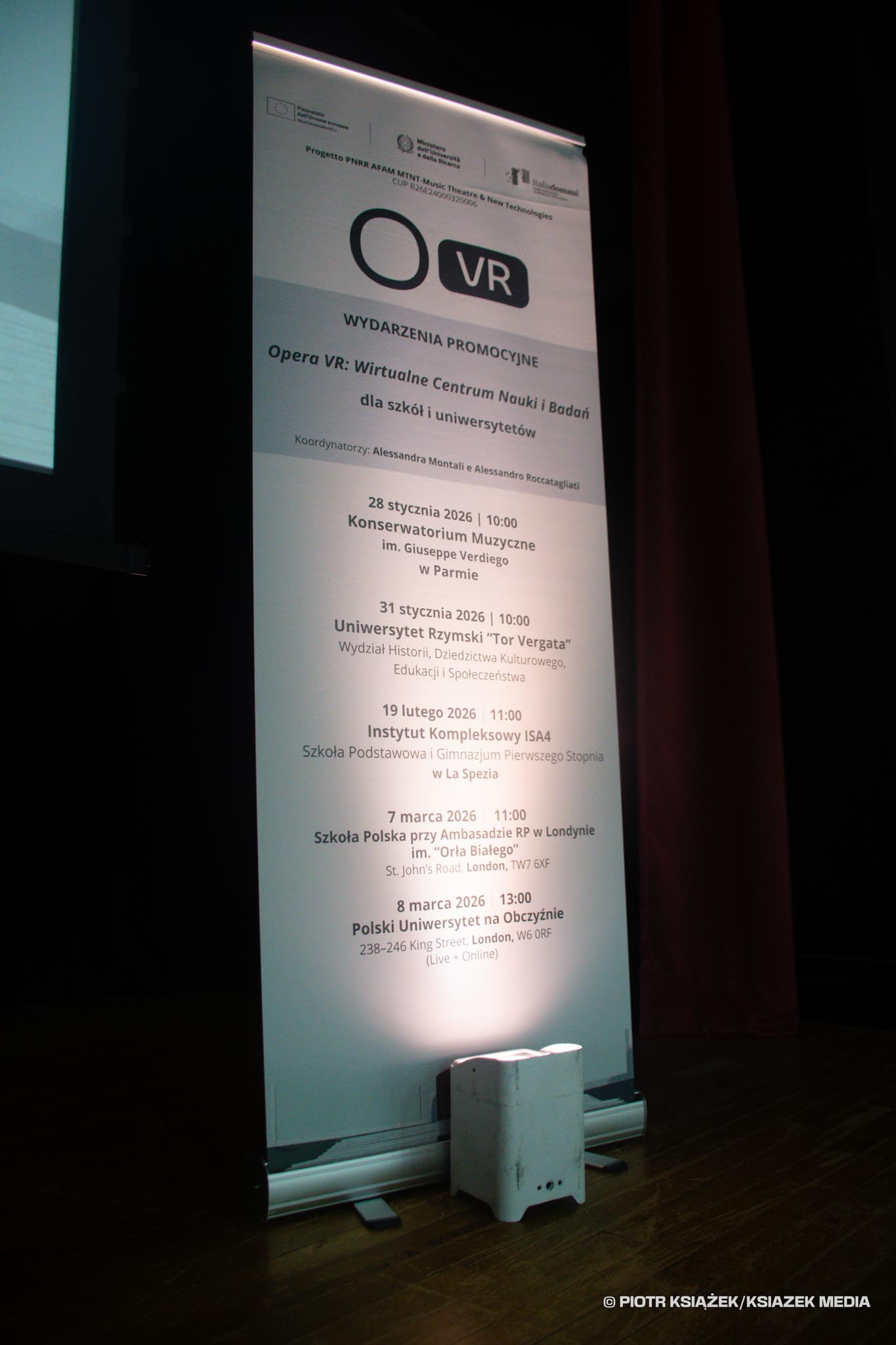
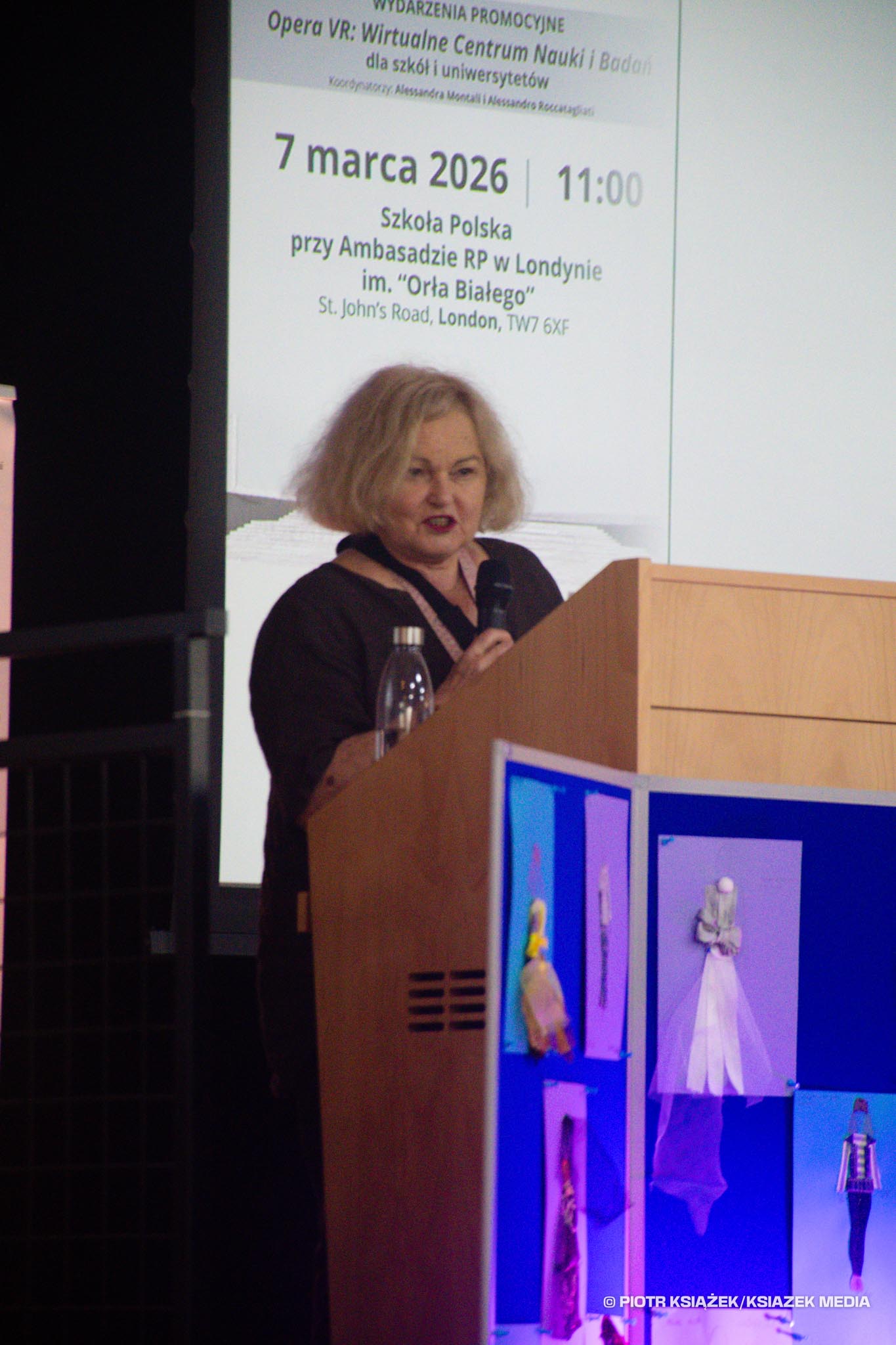
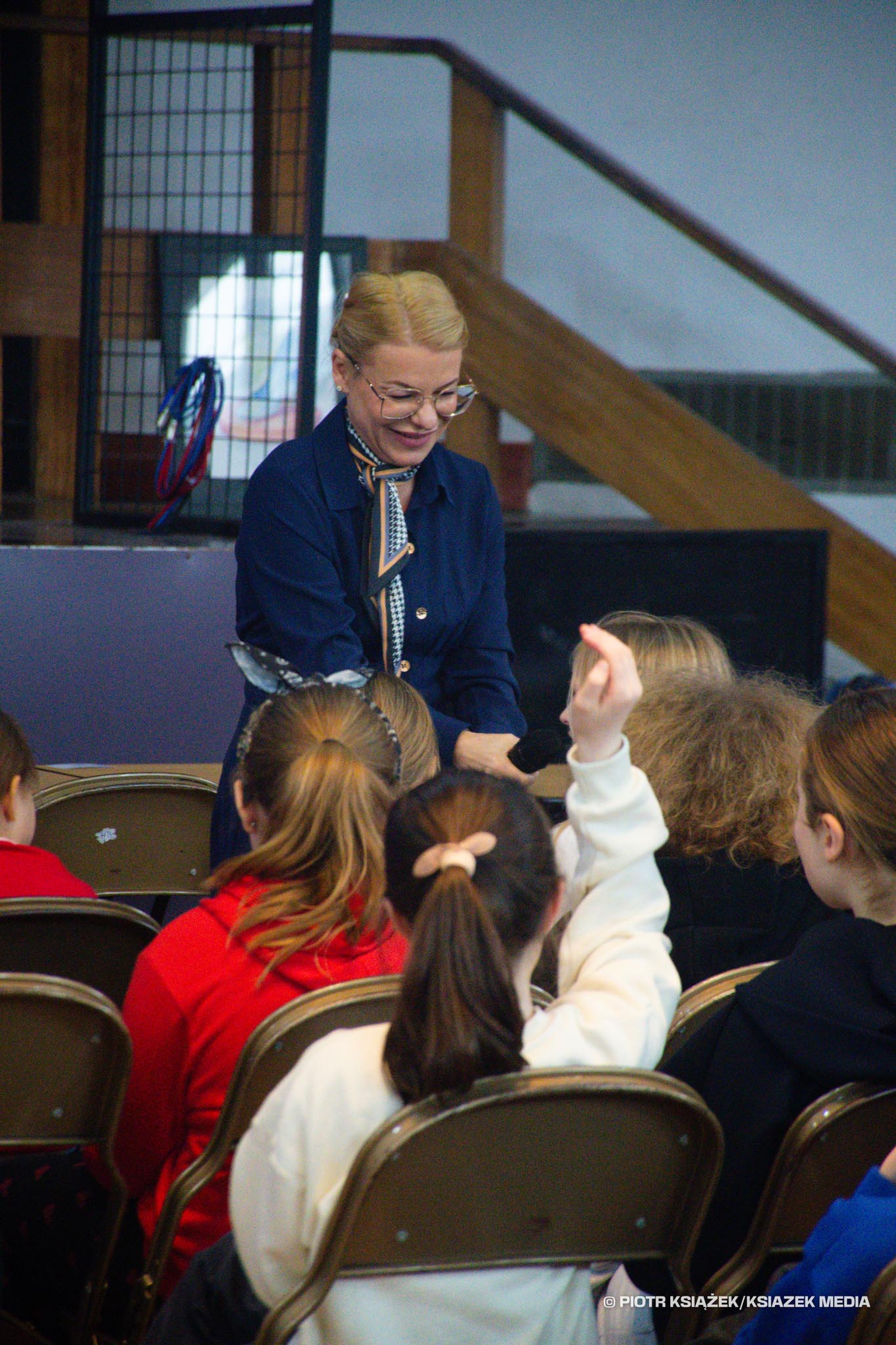
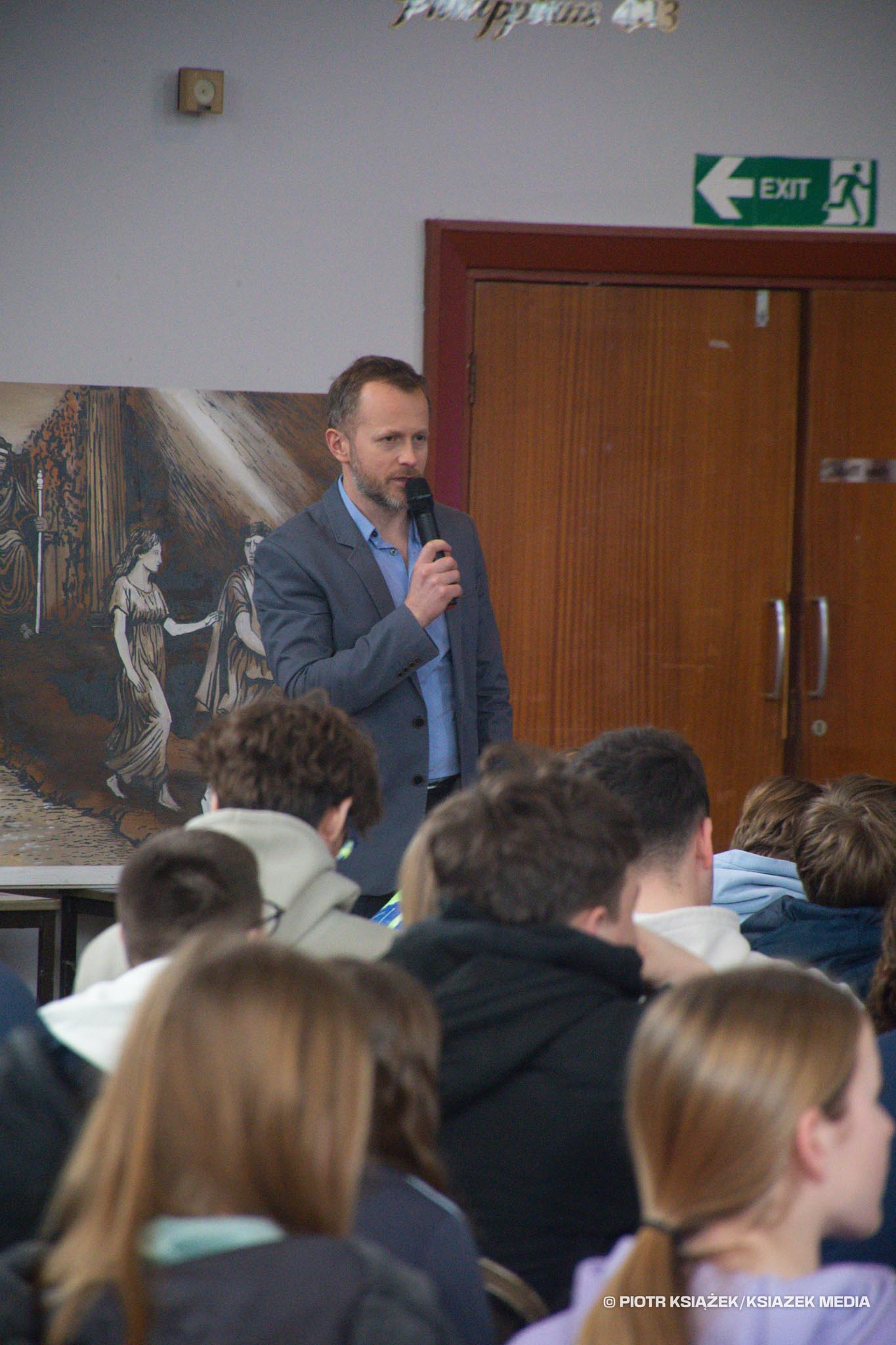
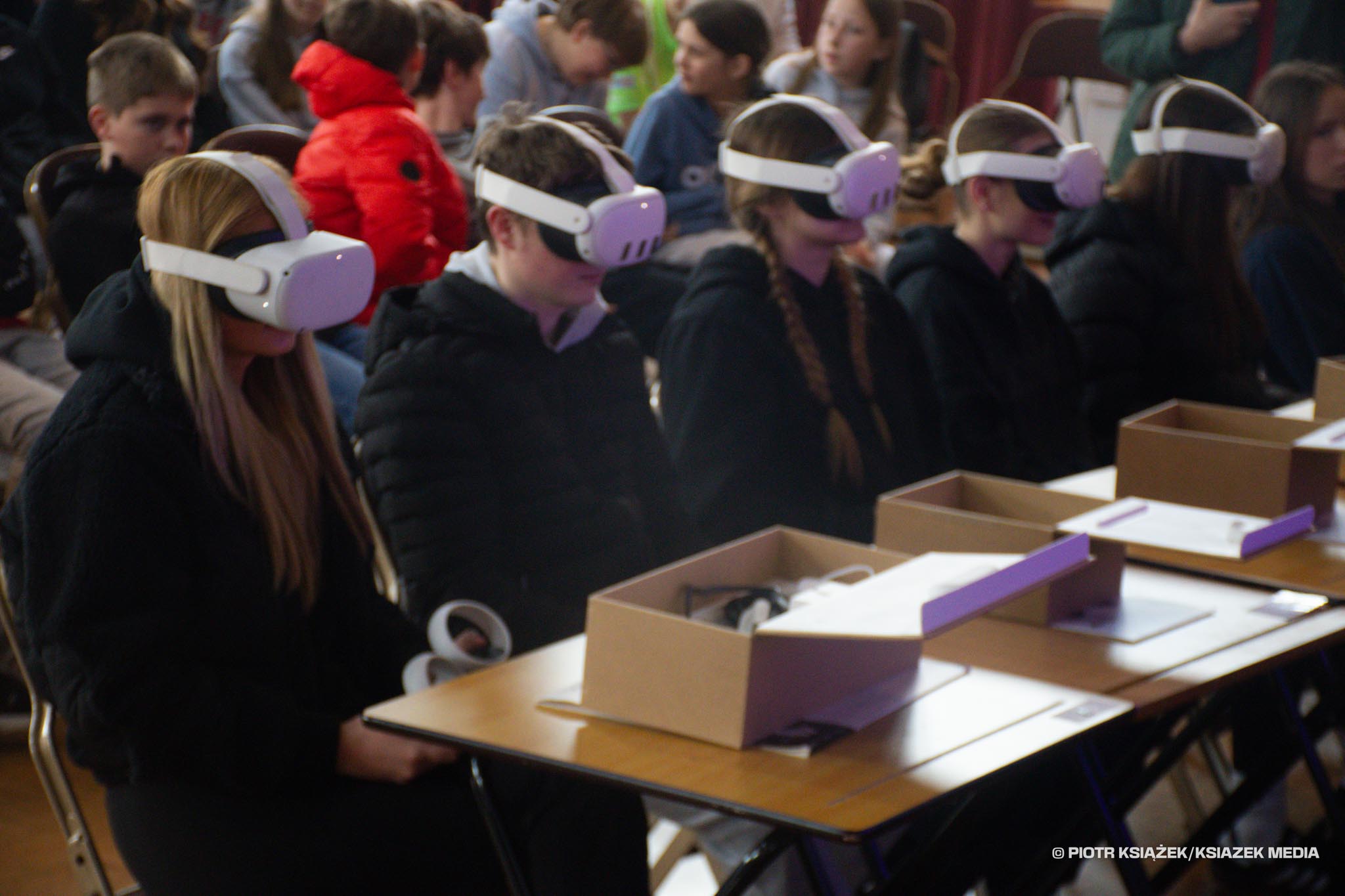
- 7 March 2026 – at the White Eagle Polish School at the Embassy of the Republic of Poland in London. The event brought together 320 pupils, 20 teachers and 10 invited guests; 66 pupils and 6 teachers stepped into the virtual world of opera themselves.
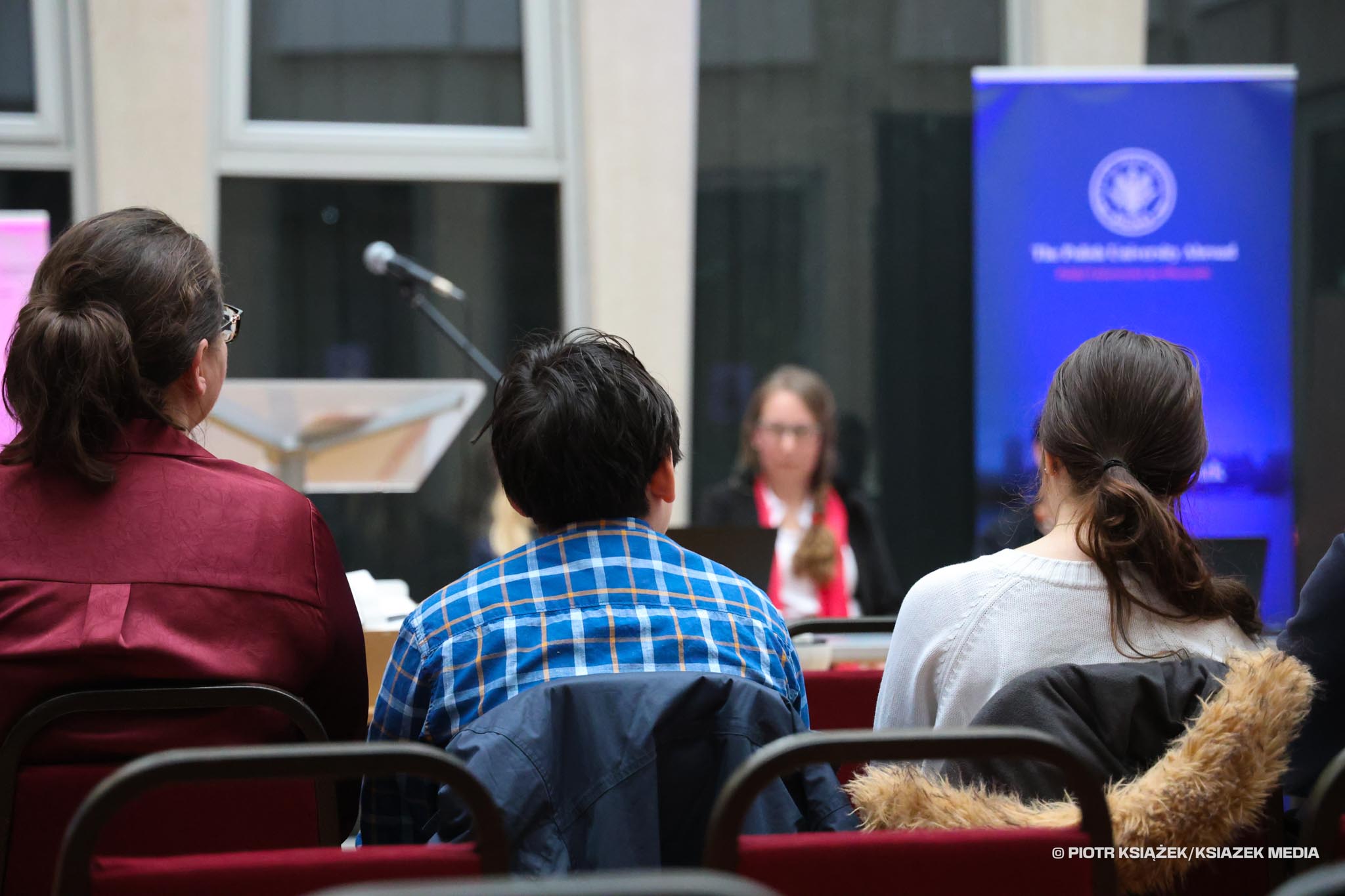
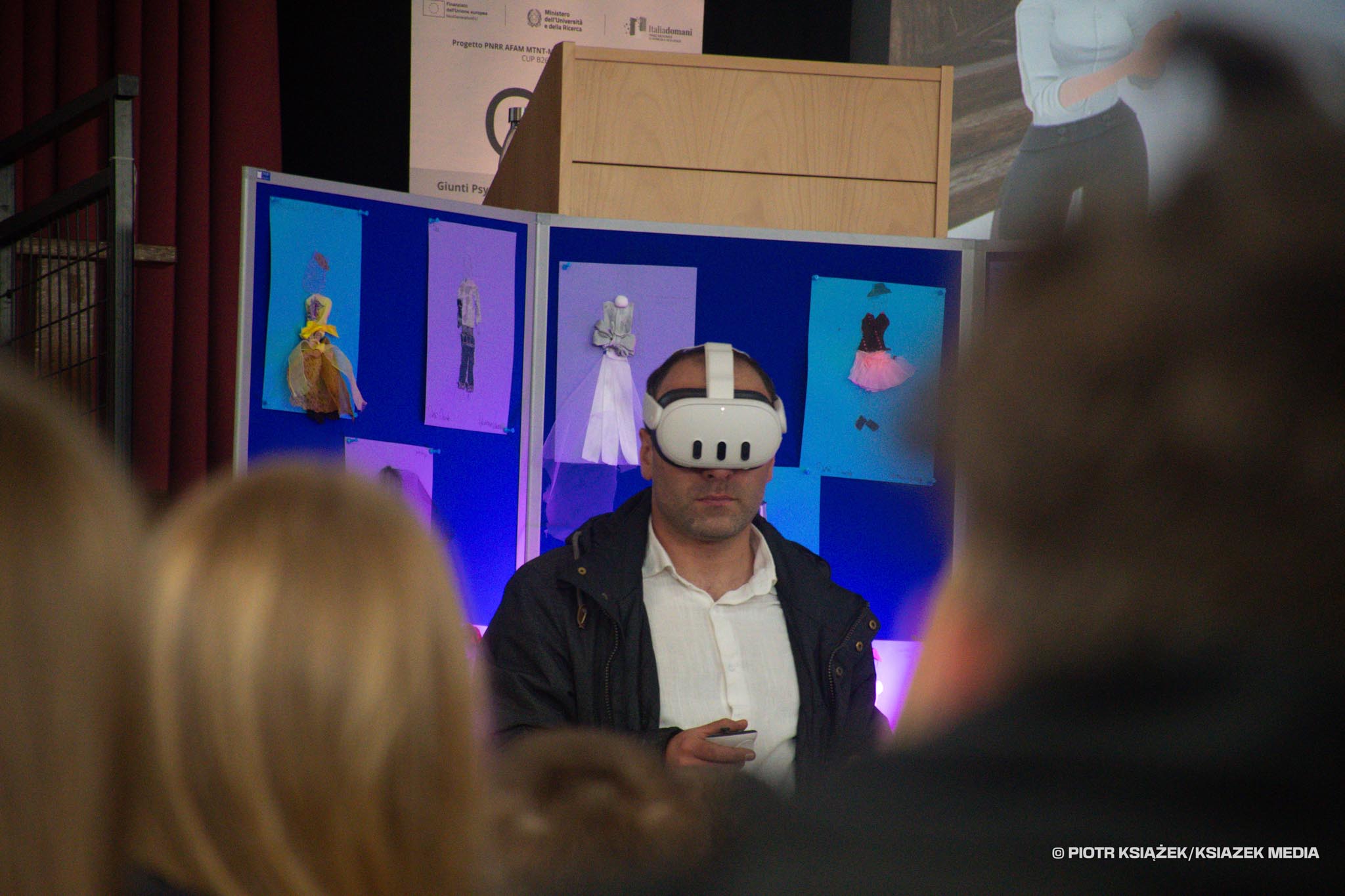
- March 2026 – at PUNO, as a hybrid academic conference attended by researchers, teacher-training students, parents and children. 36 participants took part in the immersive experience directly.
Both events were accompanied by art workshops inspired by the works of Monteverdi and Prokofiev. The children’s artworks created during the workshops at the Polish School were exhibited the very next day, 8 March, in an exhibition accompanying the conference at PUNO. The children were far from passive recipients – they asked questions, discussed and created, while teachers saw first-hand how a well-designed VR experience can support conventional teaching.
What’s Next?
Opera VR is not an end point but a solid foundation for further work: research into the role of immersive technologies in music education, teacher development and interdisciplinary collaboration. The project has shown that virtual reality can successfully enter the classroom – provided it is grounded in a clear pedagogical framework. We believe that, in this way, opera and ballet can become for the younger generation not a distant “art for adults” but a space for their own discovery.
We warmly thank all the pupils, teachers, artists, partners and guests who helped to shape this project.
The project was carried out within PNRR AFAM MTNT – Music Theatre & New Technologies, coordinated by Alessandra Montali and Alessandro Roccatagliati. Funded by the European Union (NextGenerationEU) and the Italian Ministry of University and Research under the National Recovery and Resilience Plan (PNRR).
Gallery