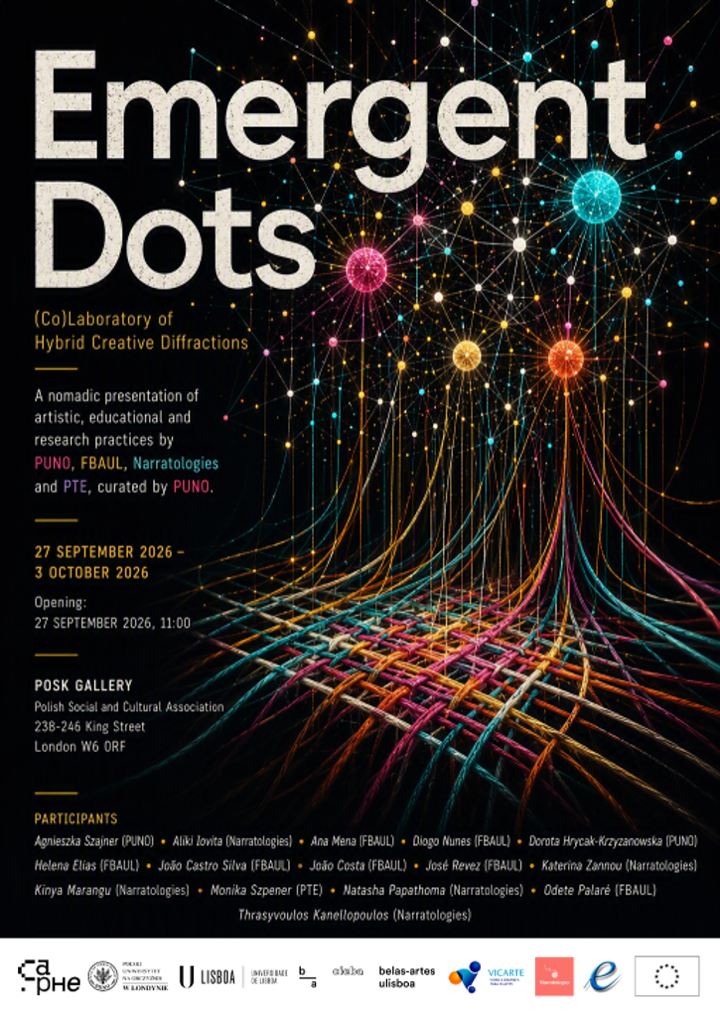
Emergent Dots: (Co)Laboratory of Hybrid Creative Diffractions is a nomadic, co-curated exhibition by partners in the CAPHE project: the Polish University Abroad in London (PUNO), the Faculty of Fine Arts of the University of Lisbon (FBAUL), the Greek organisation Narratologies, and the Polish Society for Aesthetics (PTE).
CAPHE (Communities and Artistic Participation in Hybrid Environments) is an international research and artistic project exploring how art, digital technologies and community-based practices create new forms of participation across physical and virtual spaces.
Organised by PUNO in London, the exhibition presents individual and collaborative artistic, educational and research work developed in hybrid environments. The works engage with storytelling, augmented reality, videopoetry, cultural identity, hybrid methods and arts-based education. The motif of threads and the loom guides visitors through the exhibition, evoking connections between disciplines, places and participants. Visitors are invited not only to view the works, but also to leave their own associations, traces and stories, becoming part of an evolving collective narrative.
The exhibition opens on Sunday, 27 September 2026, from 11:00 to 16:00 at POSK Gallery in London, and will run until 3 October 2026.
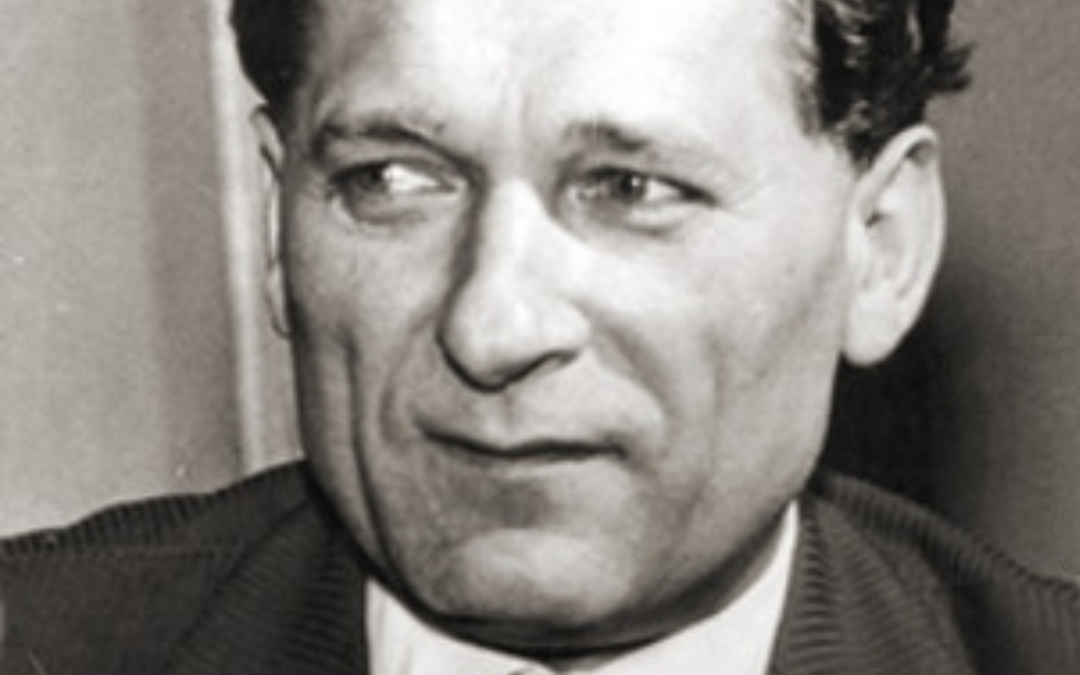
“The Partisans” were in the 1960s a very influential political group within the communist party and state apparatus in Poland. Led by Mieczysław Moczar, the minister of interior and leader of the veterans` associations (during the WW II he was a famous commander of the communist resistance), they founded a dynamic political movement which strongly influenced not only politics, but also mass-media and culture. Their ideology based on nationalism, anti-Semitism and exploitation of Polish history – especially its non-communist aspects which helped attract followers from outside the ruling party. “The Partisans” undertook the most far-reaching attempt to shape the Polish model of national communism and were often compared by contemporary observers and analysts with parallel developments in Romania.
Paweł Machcewicz is a historian, professor at the Institute of Political Studies of the Polish Academy of Sciences in Warsaw. From 2008 to 2017, he was the founding director of the Museum of the Second World War in Gdańsk. He has taught at the Warsaw University and the Nicolaus Copernicus University in Toruń and was director of research and education at the Institute of National Remembrance in 2000-2006.
His main areas of research are the Second World War, the Cold War and communist regimes in East-Central Europe. His many books include: Rebellious Satellite. Poland 1956 (Woodrow Wilson Center-Stanford University Press, Washington DC-Stanford, 2009); Poland`s War on Radio Free Europe 1950-1989 (Woodrow Wilson Center-Stanford University Press, Washington DC-Stanford, 2014); The War That Never Ends. The Museum of the Second World War in Gdańsk (De Gruyter, Berlin-Boston 2019); Wina, kara, polityka. Rozliczenia ze zbrodniami II wojny światowej (with Andrzej Paczkowski; Znak, Kraków 2021); Narodowy komunizm po polsku. „Partyzanci” Moczara (Krytyka Polityczna, Warszawa 2025).
Deprivation of Citizenship and Diplomatic Fallout: The 6 October 1938 Ordinance in Polish–Swiss Relations, 1938–1940
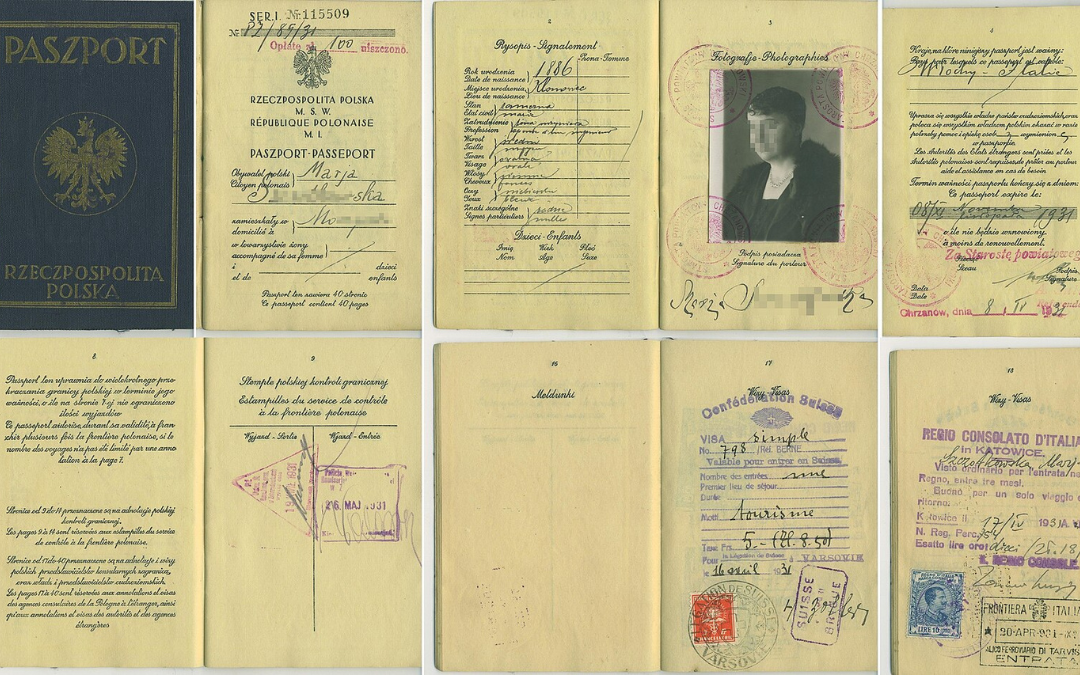
Following the Anschluss and the failure of the Evian Conference, on the 6 October 1938 Poland issued an ordinance requiring passport revalidation, effectively preventing many Jews from returning. Switzerland responded by tightening visa requirements and expressing concerns over reliability of Polish passports. The paper focuses on the impact of this law on the diplomatic relations between both countries and the role of Tytus Komarnicki, Polish envoy to Switzerland, whose initially liberal stance shifted toward strict enforcement of the aforementioned ordinance. Drawing on previously unused archival sources, the study reveals how both countries navigated through legal, diplomatic, and humanitarian challenges amid worsening geopolitical conditions and after the outbreak of World War II.
Dr hab. Paweł Duber is a historian and lecturer in the Unit of European History at the Polish University Abroad, as well as a history teacher in British schools. He graduated from the University of Silesia in Katowice and has worked at various cultural and academic institutions, including the University of Warsaw, the University of Fribourg (Switzerland), the Józef Piłsudski Museum in Sulejówek, and Nottingham Trent University. He earned his PhD in 2009 at the Academy of Humanities in Pułtusk and completed his habilitation in 2015 at the Institute of History of the Polish Academy of Sciences in Warsaw. His research focuses on the political history of Poland after 1918, 20th-century Central and Eastern Europe, Polish political and military emigration after 1939, the history of diplomacy and international relations, and the politics of memory. He is the author / co-author of several books and nearly one hundred scholarly and popular articles. His most recent book, a biography of the Polish diplomat and lawyer Tytus Komarnicki, is being published by the Ministry of Foreign Affairs in Warsaw.
Polish University Abroad LONDON is inviting you to a scheduled Zoom meeting.
Topic: Polish University Abroad History Seminar Zoom Meeting
Polski Uniwersytet na Obczyźnie od 2011 roku organizuje w trybie hybrydowym coroczne międzynarodowe „Konferencje Kwietniowe”, dedykowane pamięci ostatniego Prezydenta Polski na Uchodźstwie – Ryszarda Kaczorowskiego, który zginął tragicznie w katastrofie smoleńskiej.