Seminarium Deprivation of Citizenship and Diplomatic Fallout

Seminarium Deprivation of Citizenship and Diplomatic Fallout

14 January 2026 | Dr. Pawel Duber (PUNO, London)

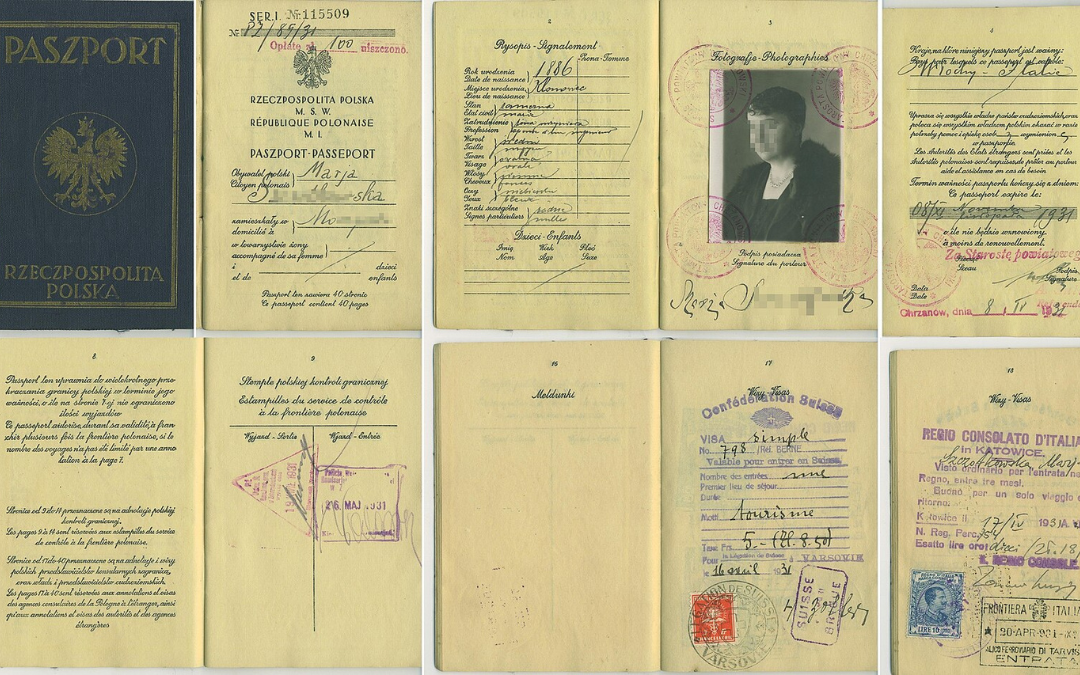
Deprivation of Citizenship and Diplomatic Fallout: The 6 October 1938 Ordinance in Polish–Swiss Relations, 1938–1940

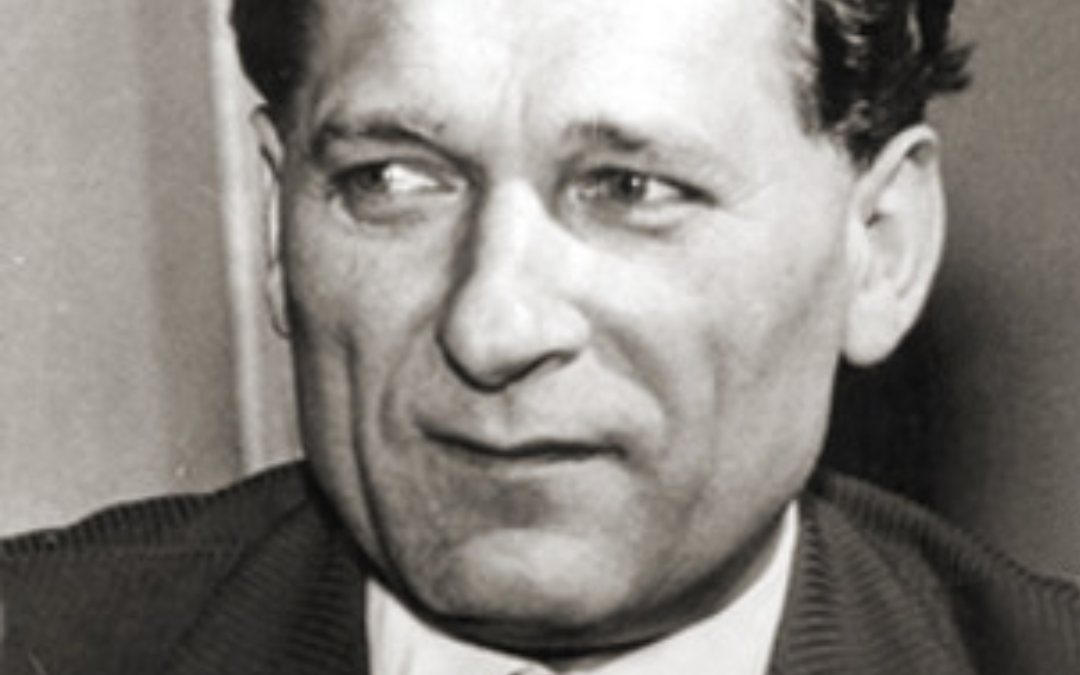
Following the Anschluss and the failure of the Evian Conference, on the 6 October 1938 Poland issued an ordinance requiring passport revalidation, effectively preventing many Jews from returning. Switzerland responded by tightening visa requirements and expressing concerns over reliability of Polish passports. The paper focuses on the impact of this law on the diplomatic relations between both countries and the role of Tytus Komarnicki, Polish envoy to Switzerland, whose initially liberal stance shifted toward strict enforcement of the aforementioned ordinance. Drawing on previously unused archival sources, the study reveals how both countries navigated through legal, diplomatic, and humanitarian challenges amid worsening geopolitical conditions and after the outbreak of World War II.

Dr hab. Paweł Duber is a historian and lecturer in the Unit of European History at the Polish University Abroad, as well as a history teacher in British schools. He graduated from the University of Silesia in Katowice and has worked at various cultural and academic institutions, including the University of Warsaw, the University of Fribourg (Switzerland), the Józef Piłsudski Museum in Sulejówek, and Nottingham Trent University. He earned his PhD in 2009 at the Academy of Humanities in Pułtusk and completed his habilitation in 2015 at the Institute of History of the Polish Academy of Sciences in Warsaw. His research focuses on the political history of Poland after 1918, 20th-century Central and Eastern Europe, Polish political and military emigration after 1939, the history of diplomacy and international relations, and the politics of memory. He is the author / co-author of several books and nearly one hundred scholarly and popular articles. His most recent book, a biography of the Polish diplomat and lawyer Tytus Komarnicki, is being published by the Ministry of Foreign Affairs in Warsaw.

Polish University Abroad LONDON is inviting you to a scheduled Zoom meeting.

Topic: Polish University Abroad History Seminar Zoom Meeting

Time: Jan 14, 2026 18:30 London

Join Zoom Meeting

https://us06web.zoom.us/j/83685952743?pwd=WTUKHRbyUIb4s3vtVovVRQ7m96asnG.1

Meeting ID: 836 8595 2743

Passcode: 813470

Seminarium z Jacobem Flawsem

Seminarium z Jacobem Flawsem

10 grudnia 2025 z Jacobem Flawsem z Kean University w New Jersey, USA

Spaces of Treblinka: Retracing a Death Camp

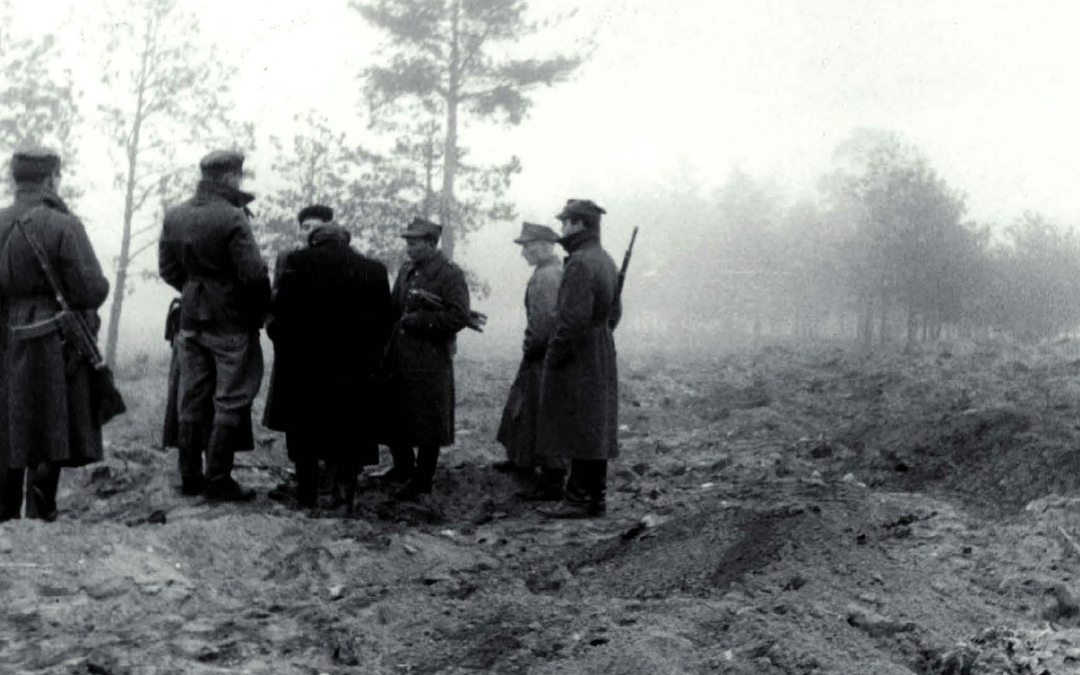
Spaces of Treblinka utilizes testimonies, oral histories, and recollections from Jewish, German, and Polish witnesses to create a holistic representation of the Treblinka death camp during its operation. This narrative rejects the historical misconception that Treblinka was an isolated Nazi extermination camp with few witnesses and fewer survivors. Rather than the secret, sanitized site of industrial killing Treblinka was intended to be, Jacob Flaws argues, Treblinka’s mass murder was well known to the nearby townspeople who experienced the sights, sounds, smells, people, bodies, and train cars the camp ejected into the surrounding world.

Through spatial reality, Flaws portrays the conceptions, fantasies, ideological assumptions, and memories of Treblinka from witnesses in the camp and surrounding towns. To do so he identifies six key spaces that once composed the historical site of Treblinka: the ideological space, the behavioral space, the space of life and death, the interactional space, the sensory space, and the extended space. By examining these spaces Flaws reveals that there were more witnesses to Treblinka than previously realized, as the transnational groups near and within the camp overlapped and interacted.  Spaces of Treblinka provides a staggering and profound reassessment of the relationship between knowing and not knowing and asks us to confront the timely warning that we, in our modern, interconnected world, can all become witnesses. See  https://www.combinedacademic.co.uk/9781496239730/spaces-of-treblinka/

Dr. Jacob Flaws is an assistant professor of history at Kean University in Union, NJ where he teaches on topics in Modern European history, the Holocaust, and global genocide. He is the author of the 2024 book  Spaces of Treblinka: Retracing a Death Camp, published by the University of Nebraska Press, as well as several other journal articles and book chapters. Flaws earned his Ph.D. In history from the University of Colorado-Boulder.  

Topic: Polish University Abroad History Seminar Zoom Meeting

Time: Dec 10, 2025 18:30 London

Join Zoom Meeting

Https://us06web.zoom.us/j/89143105203?pwd=XvDTu3mKCw0BDeuV4JYgyRynlCBsss.1

Meeting ID: 891 4310 5203

Passcode: 679290

Polish University Abroad History Seminar

Polish University Abroad History Seminar

Zapraszamy na seminarium online The Mechanisms of Collaboration z profesorem Piotrem Maciejem Majewskim

The Mechanisms of Collaboration

This paper focuses on collaboration as a political and social phenomenon. It mainly concerns the Second World War, but it also attempts to answer the question why collaboration with the enemy (collaborationism and other forms) was only recognised and condemned at that time. Through the analysis of various cases of collaboration in Eastern and Western Europe and Asia, I attempt to show the mechanisms that occurred in the relations between the occupiers and the occupied communities. I demonstrate that this phenomenon was perceived and judged in very different ways, and that the assessment could vary depending on the time, place and circumstances.

Piotr Maciej Majewski is Professor of History at the University of Warsaw. His main academic interests are history of Czechoslovakia and Czech lands and the Czech-German relations in 19th and 20th centuries. He has published extensively on the Munich Crisis, prewar Czechoslovakia, and the Protectorate of Bohemia and Moravia. From 2009 to 2017, Professor Majewski was deputy director of the Museum of the Second World War in Gdańsk, responsible for development of the permanent exhibition. His latest monograph, Brzydkie słowo na k”. Rzecz o kolaboracji [The Ugly K-Word. An Essay on Collaboration] (Warsaw 2024), explores the phenomenon of collaboration.

Time: Nov 5, 2025 18:30 London

Join Zoom Meeting

https://us06web.zoom.us/j/81938962052?pwd=yPZGMmf3nYuEmhIrL5NGfCPWMU6TYK.1

Meeting ID: 819 3896 2052

Passcode: 094553